
A Project funded by the Central Minnesota Community Foundation and the Downtown Fund.
A story of art, community, and the beautiful mess of making something together.
THE BEGINNING: A WALL WAITING FOR COLOR
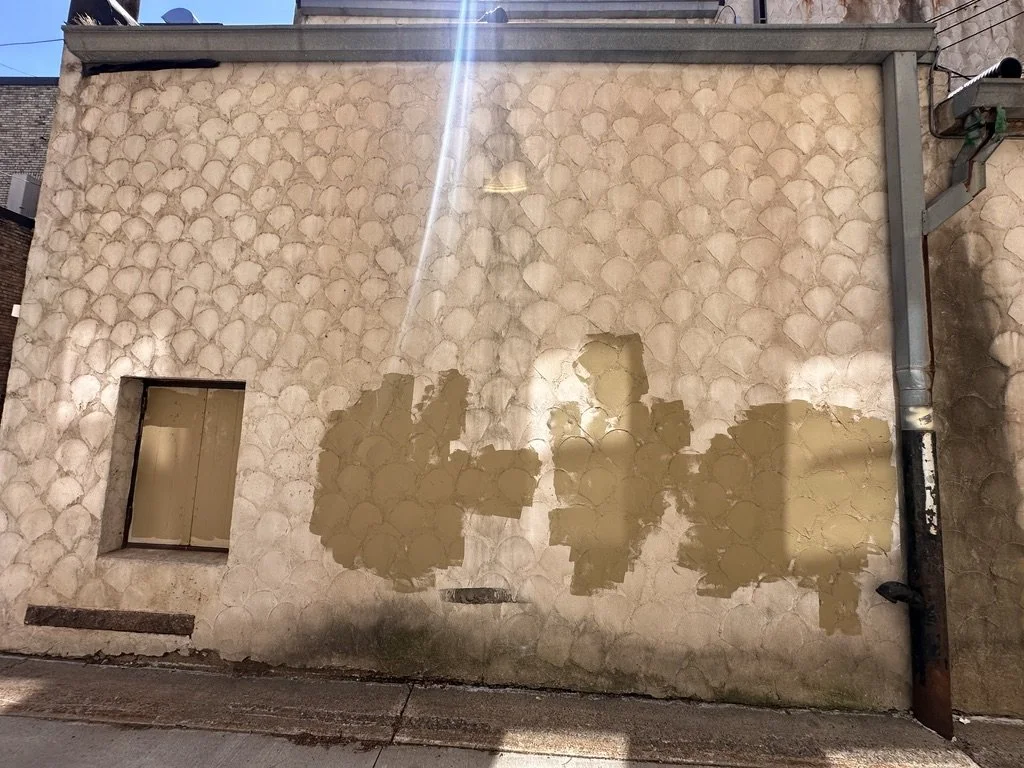
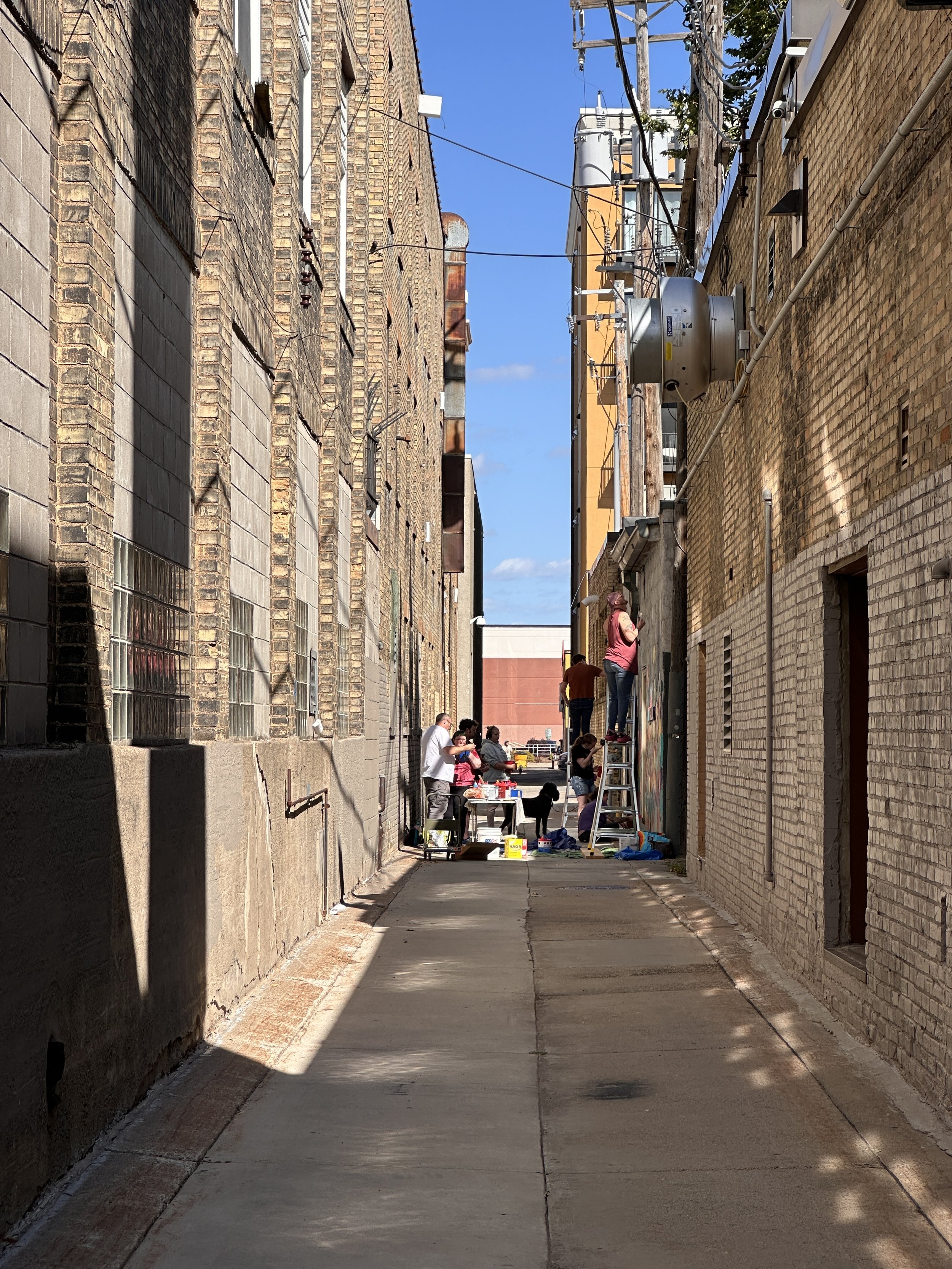
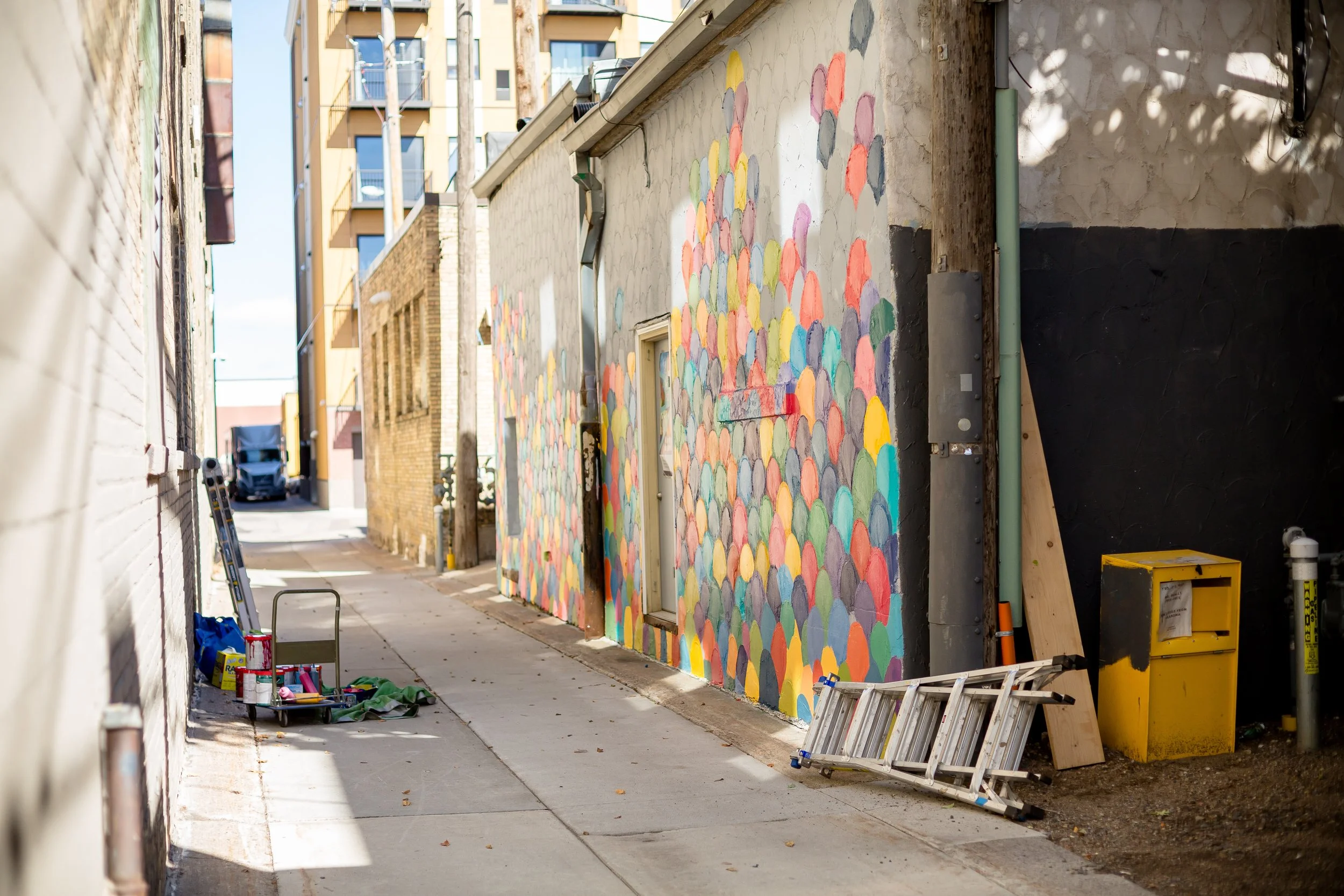
For years, the alley behind Books Revisited in downtown St. Cloud was nothing special—"various shades of tans and browns," as the bookstore owner, Jon Lee, described it. It was the kind of space people walked through without really seeing it. Maybe other people avoided it because they didn’t know where it led.
But what if we could transform it? What if that forgotten alley could become a vibrant gathering place and a symbol of downtown creativity?
That's how Prism Path began.
THE FIRST SURPRISE: COMMUNITY INPUT CHANGES EVERYTHING
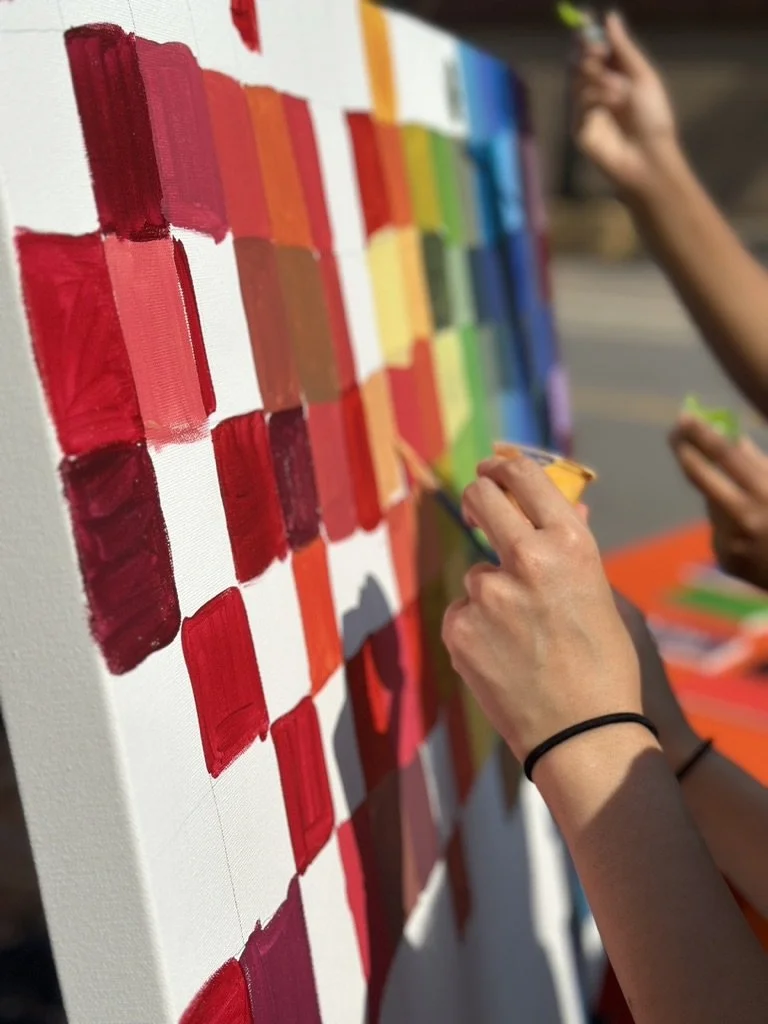
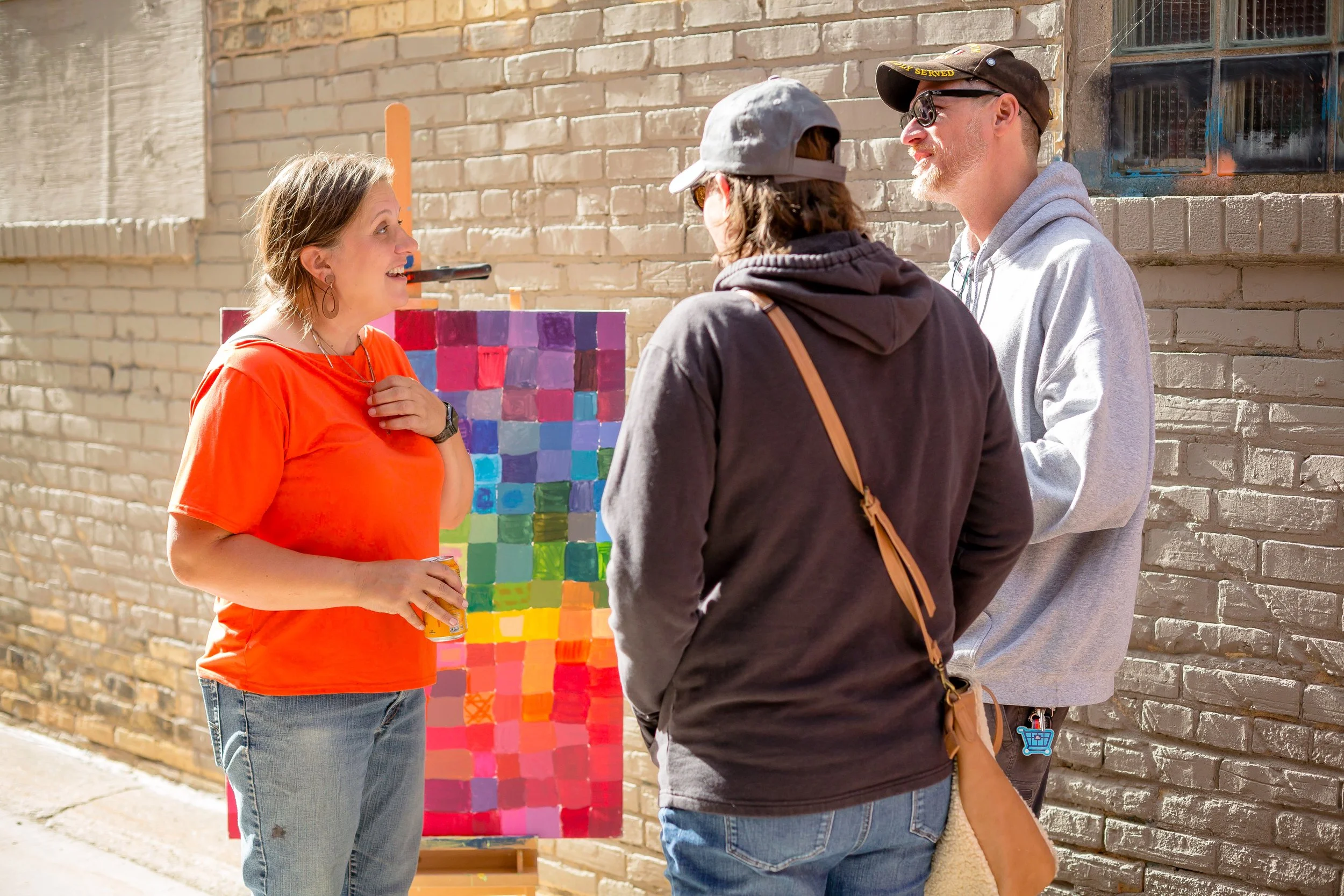
Passersby on St. Germain Street, adding hand mixed colors to the canvas
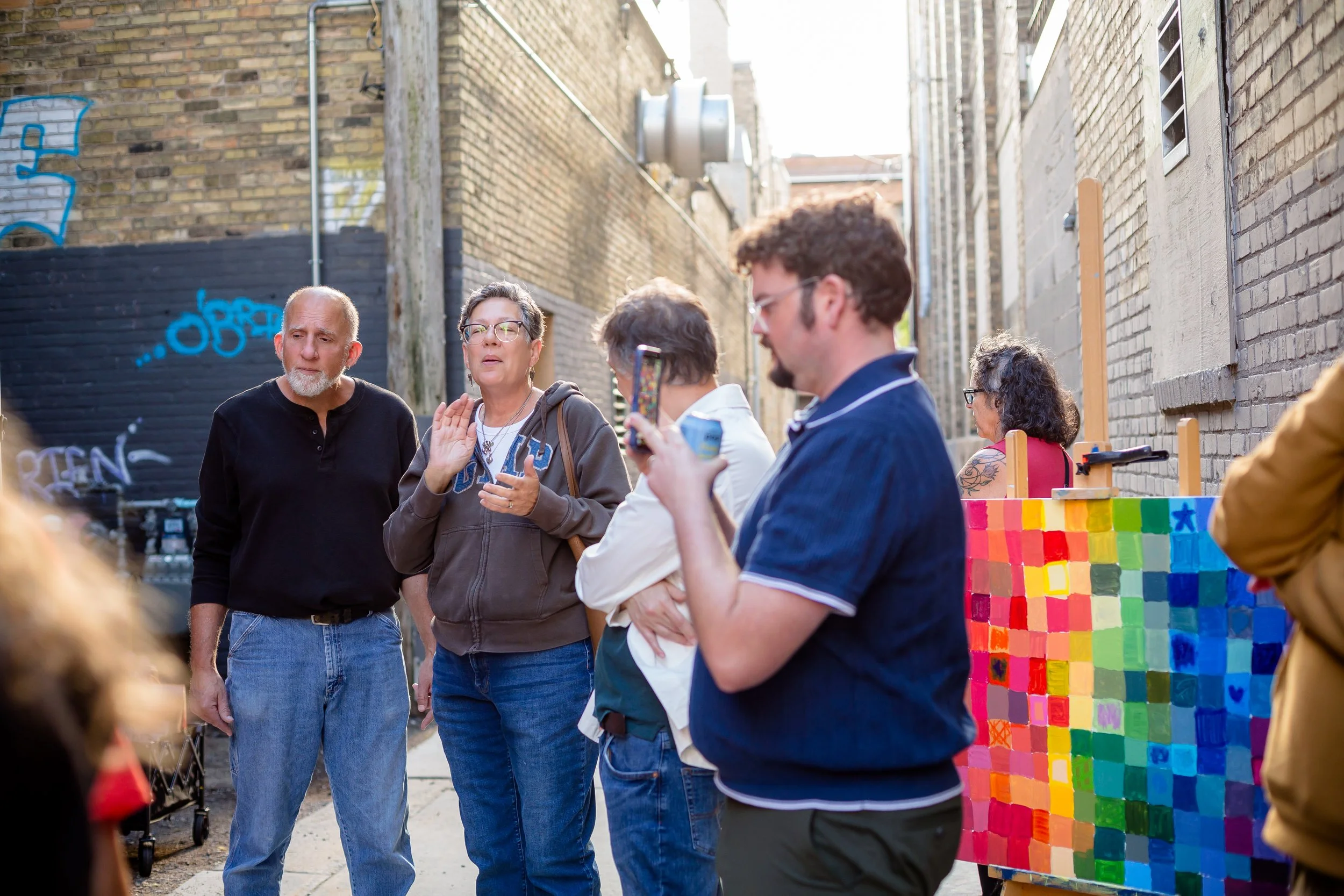
In June, I hosted the first community design session at Books Revisited. I imagined a "rainbow-esque" mural—lots of bright color, lots of joy. The plan was simple: community members would mix colors and place them on a canvas grid that mimicked the wall behind the store.
About 25 people showed up.
Kids, adults, families. Everyone enthusiastically mixing paints and placing colors. It was exactly what I'd imagined.
Then Jon came outside to see the progress, knowing it was a ‘rainbow’ but letting me now one key detail…
"I'm colorblind. And looking at this... I can’t see this section (pointing to the reds) and this section (pointing to the greens)."
This was the moment everything changed.
THE PIVOT: DESIGNING FOR EVERYONE
Jon's honesty was a gift. It forced us to ask: If this mural is for the community, it needs to work for ALL the community. Not everyone sees color the same way. Some people are colorblind. Some have low vision. Some experience color differently than others.
We couldn't just make something beautiful for some people and inaccessible to others.
So we started over.
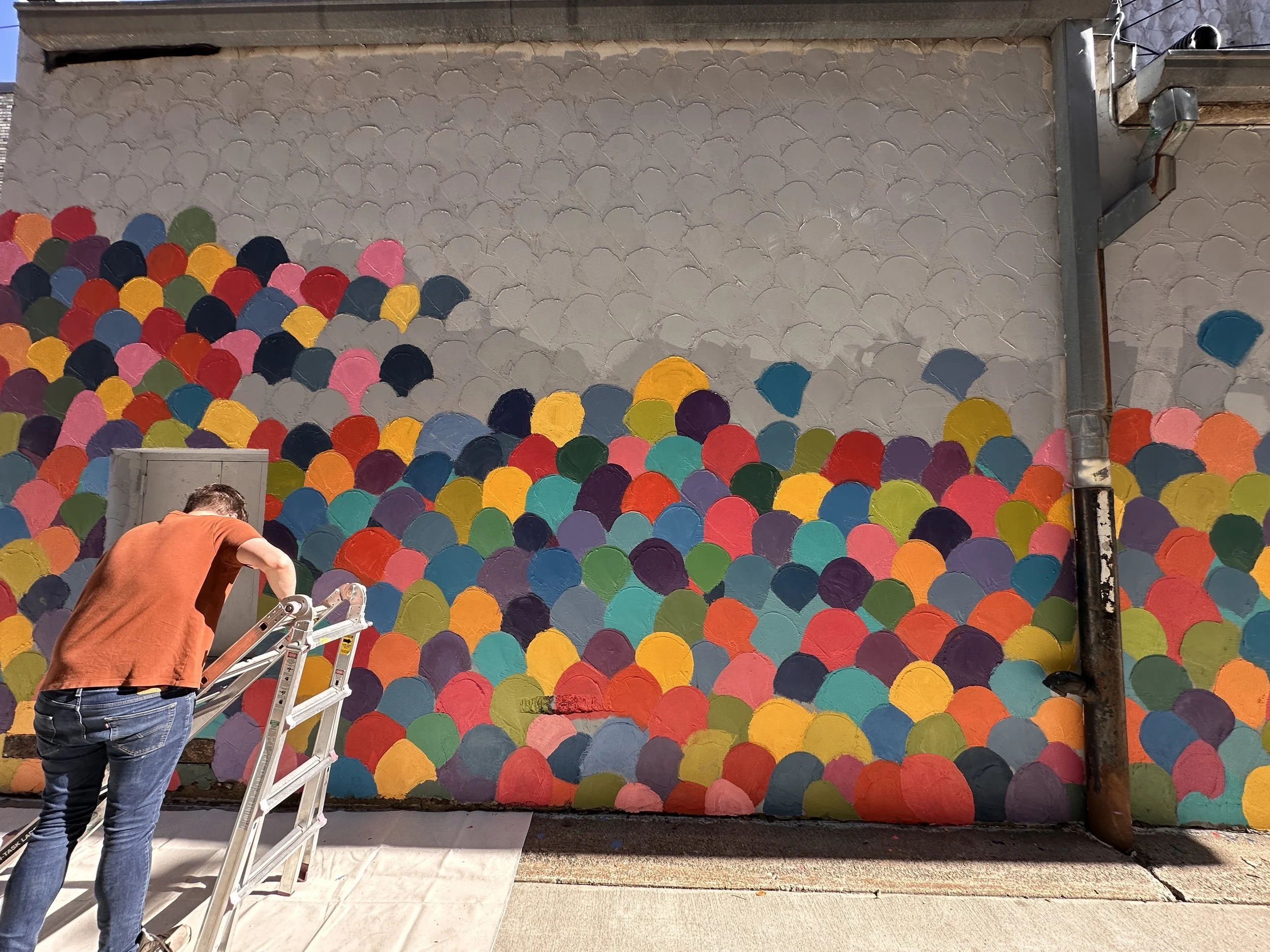
Instead of a rainbow-based design, we shifted to a tone and contrast-based composition. Darker colors next to lighter colors. Shapes that work regardless of how someone perceives color.
We even downloaded a colorblindness simulation app to test our paint choices while working. If it looked right through that lens, we knew we were on track.
This wasn't a compromise. It was an upgrade. The final mural is more thoughtful, more intentional, and more inclusive.
Change of Plans!
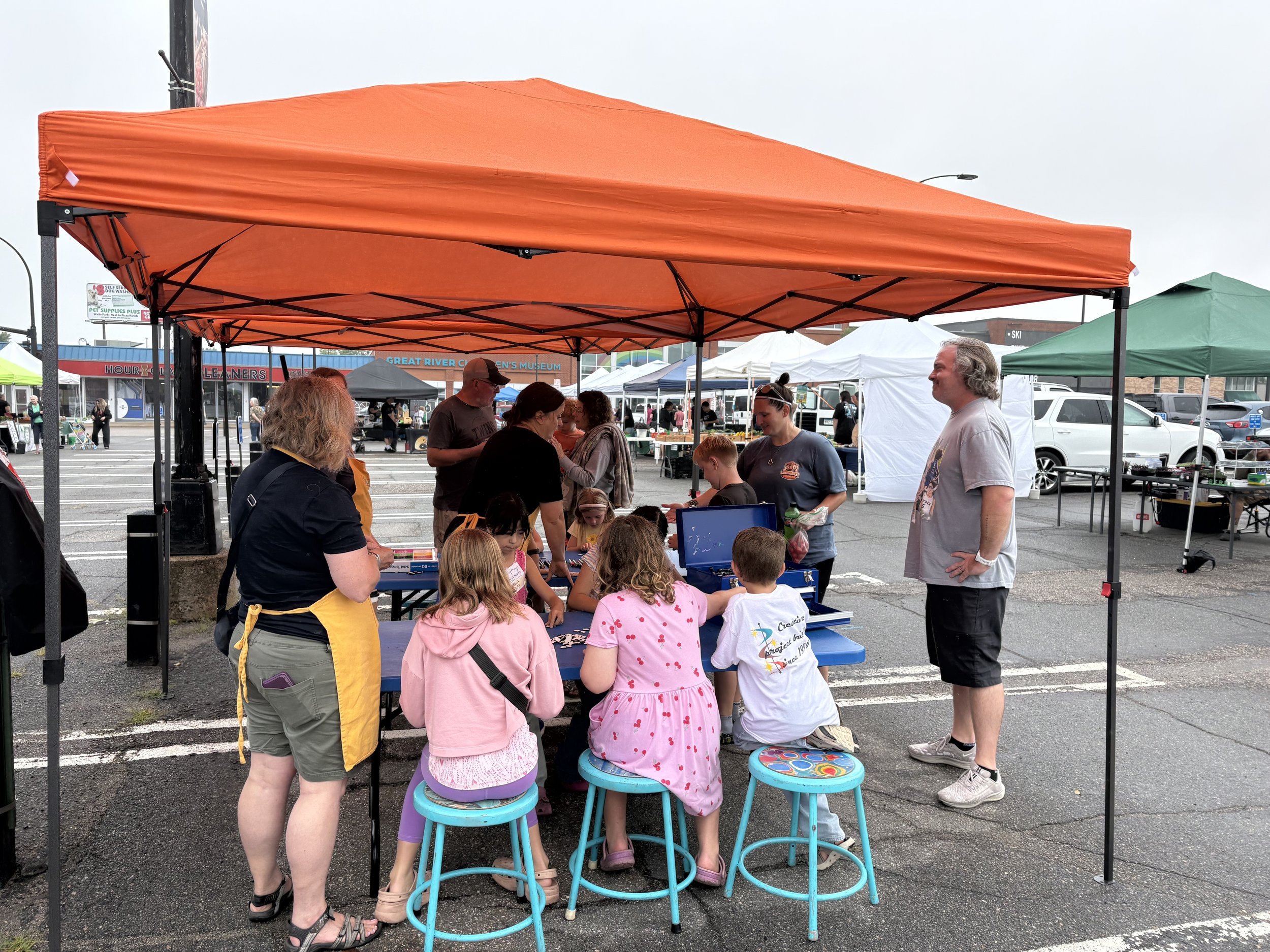
Tile Coloring at The Farmers Market
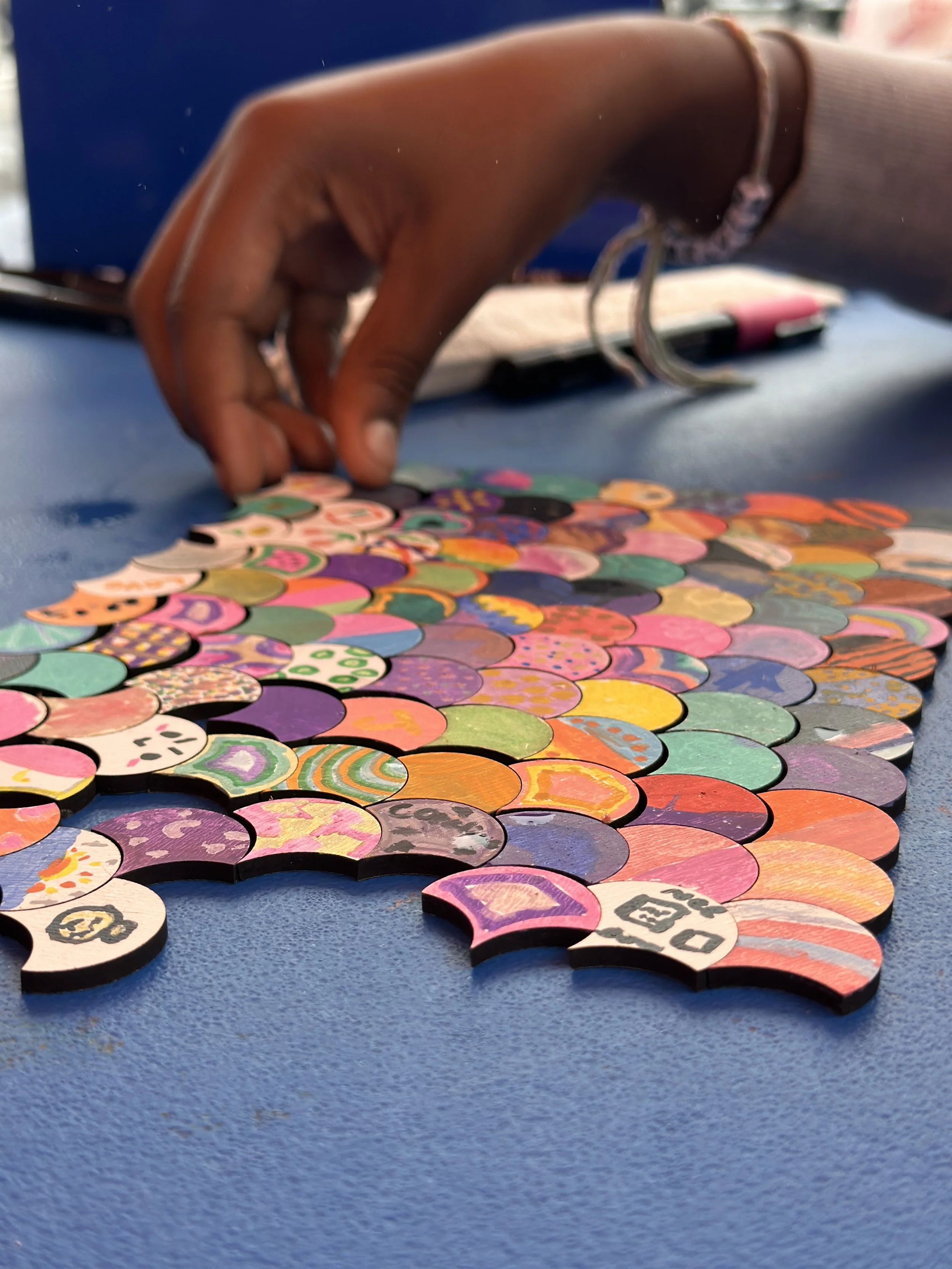
THE TILES: COMMUNITY HANDS, COMMUNITY HEART
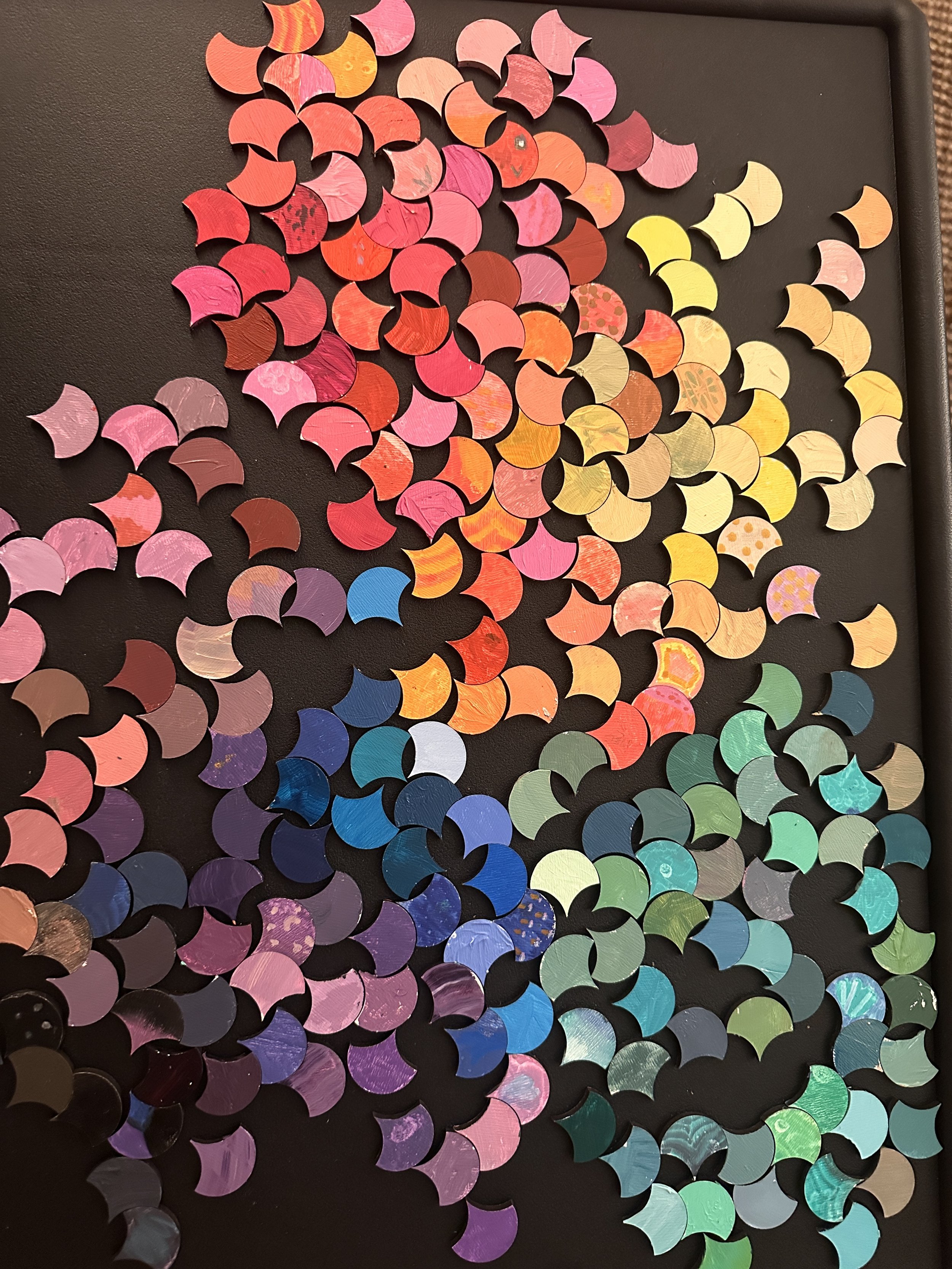
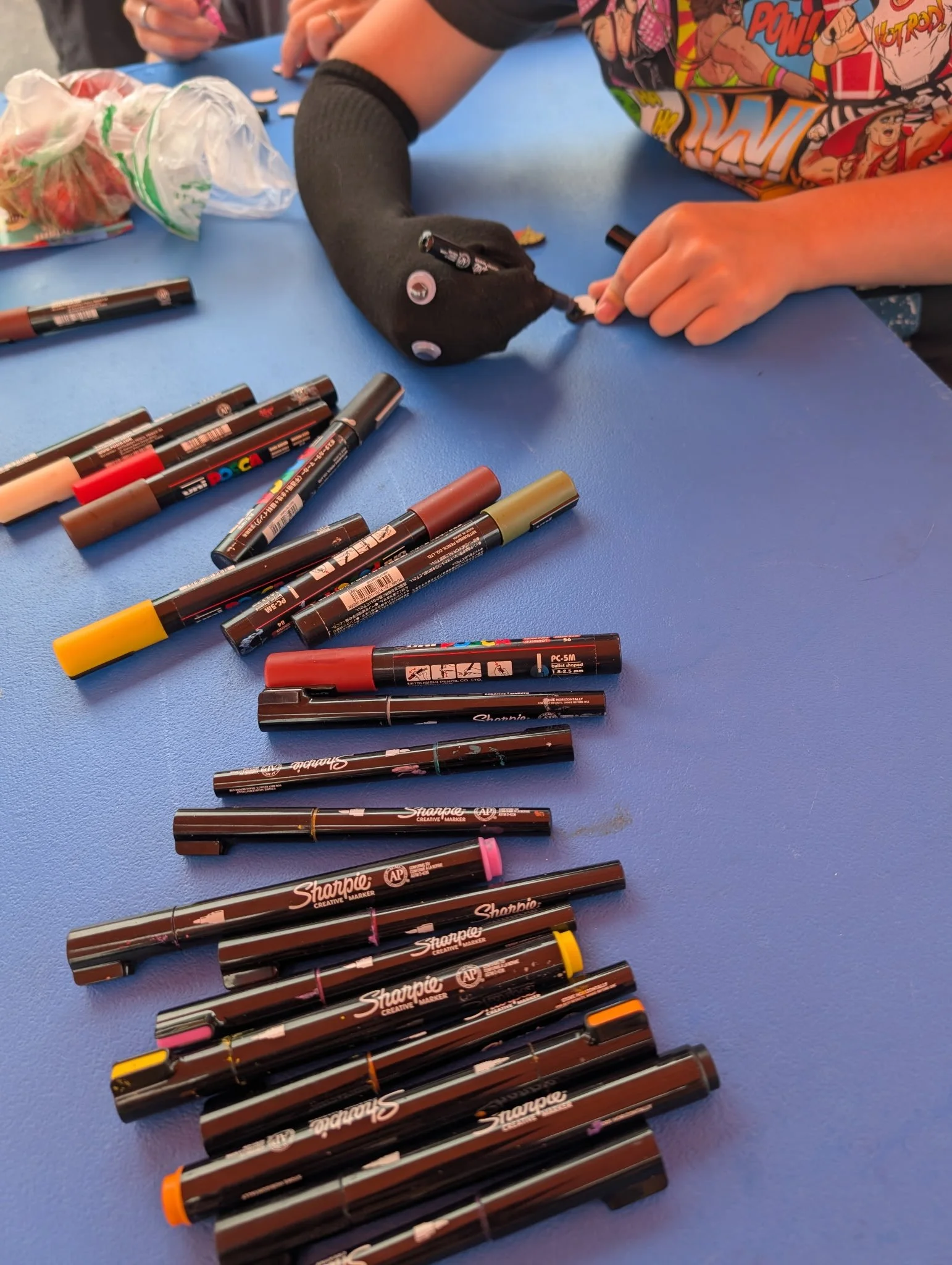
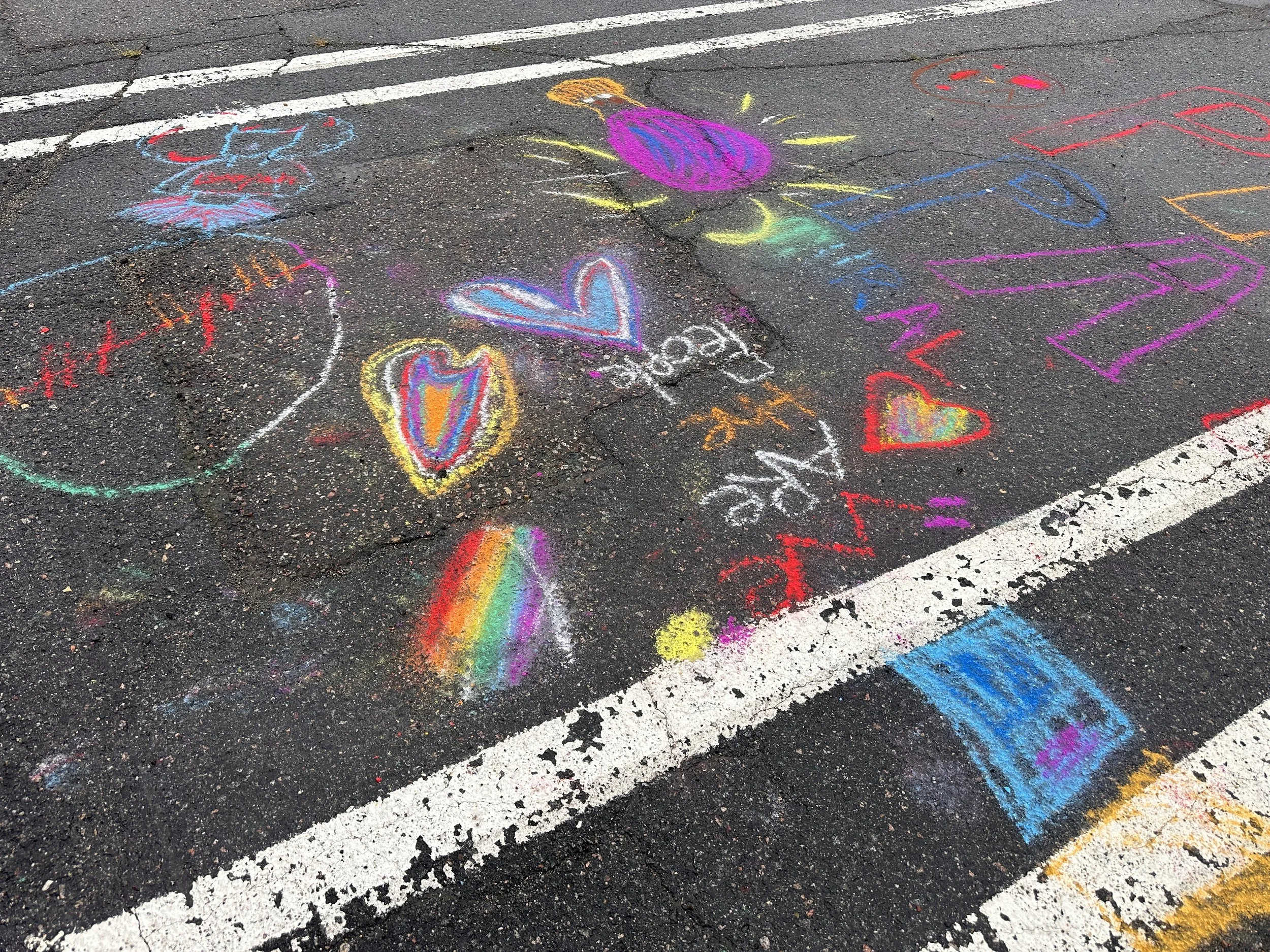
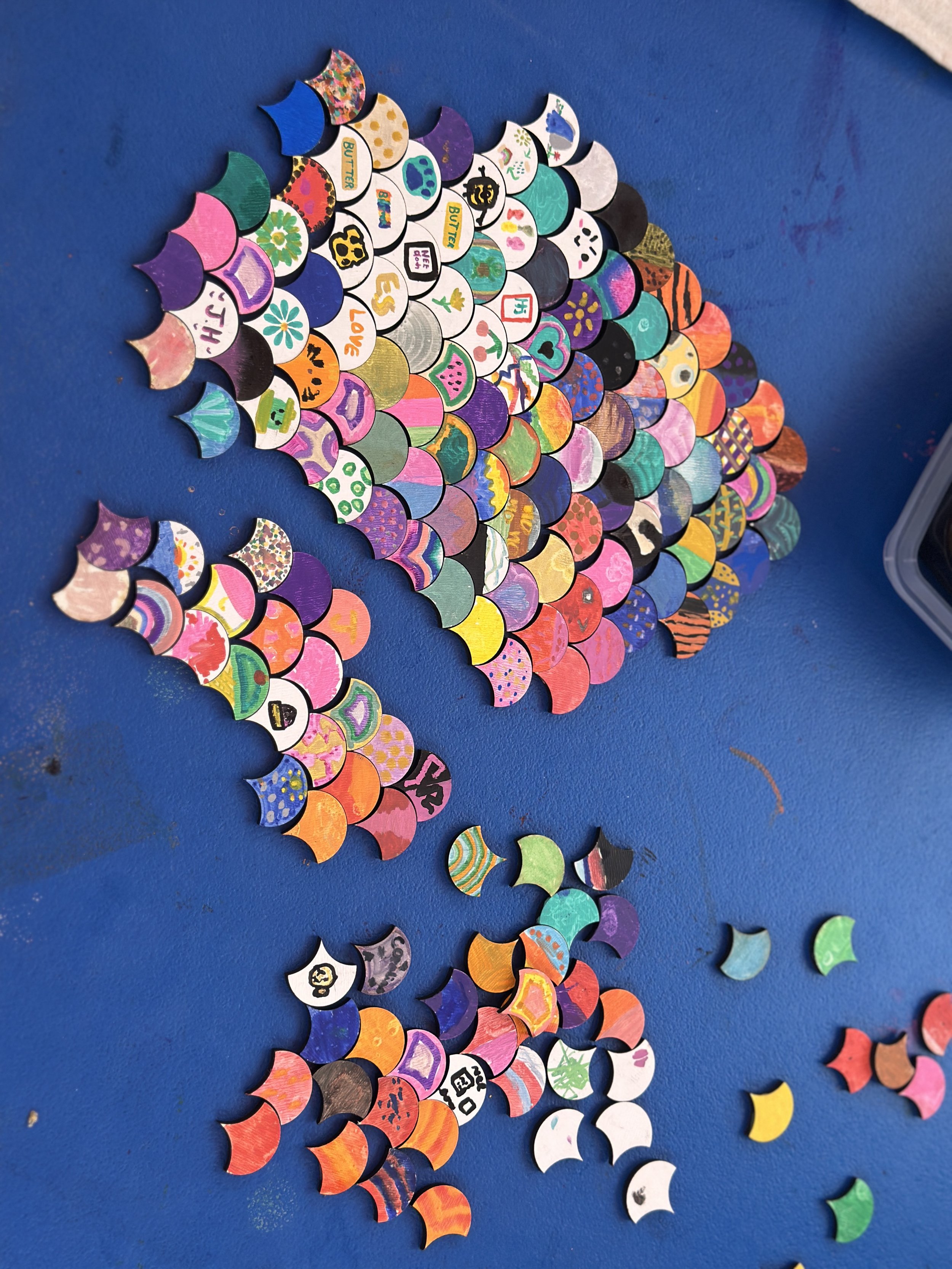
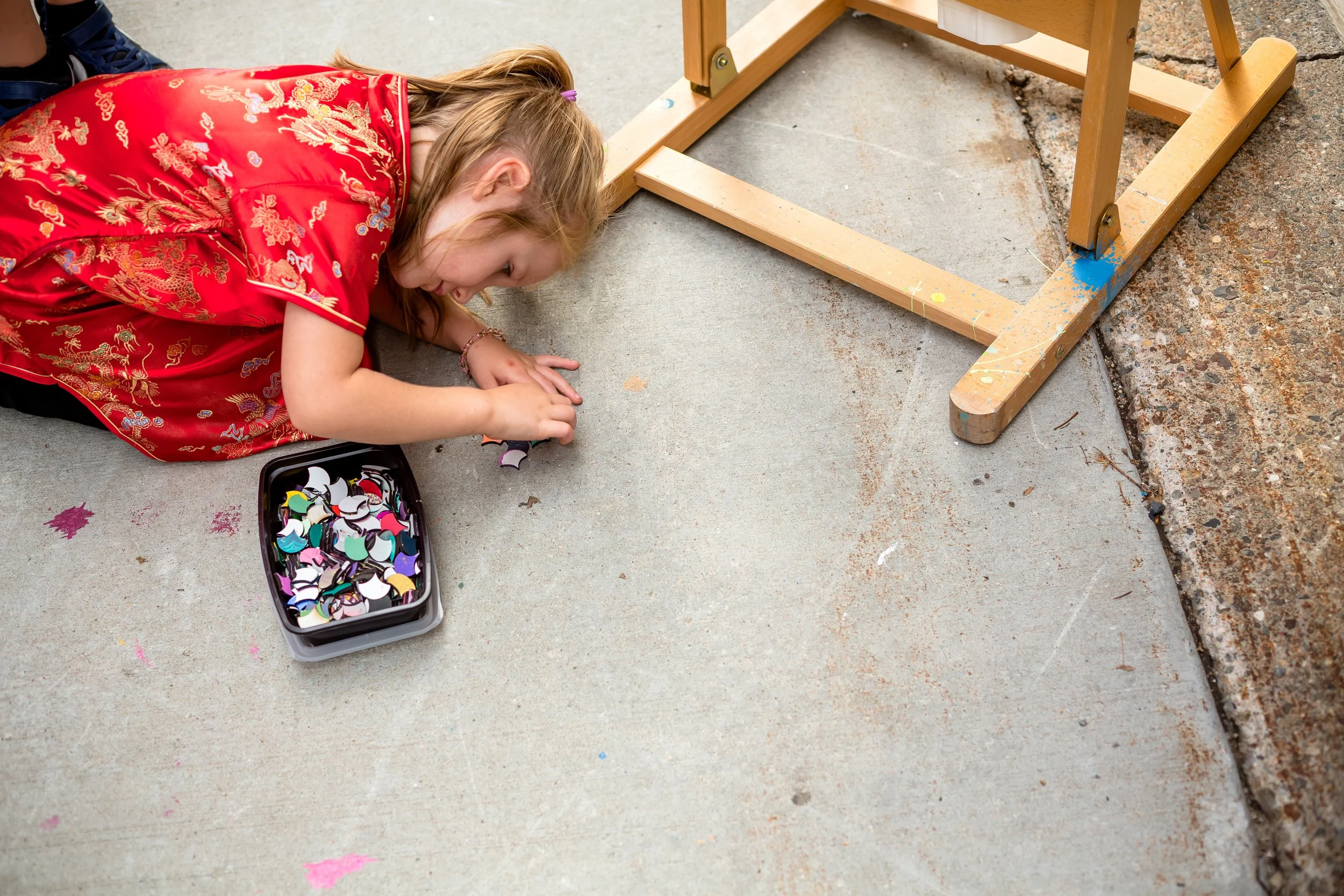
For sessions 3 and 4, I had 100 scale-shaped tiles laser cut to mimic the textured wall. Community members hand-painted them at the Farmers Market and B-Side Indie Music Cafe.
The range of colors was incredible. Bright yellows. Deep purples. Teals and maroons and oranges. Each tile hand-painted by someone who believed in this project (or were just then learning about the project).
Then I brought them home and did something unconventional. Instead of creating a rendering in my sketchbook, I photographed different arrangements of the tiles on my dark table and texted them to Jon.
"Which design feels right to you?"
We texted back and forth, choosing based on contrast and tone. It felt collaborative. Because it was.
THE WALL: WHERE THINGS GOT REAL
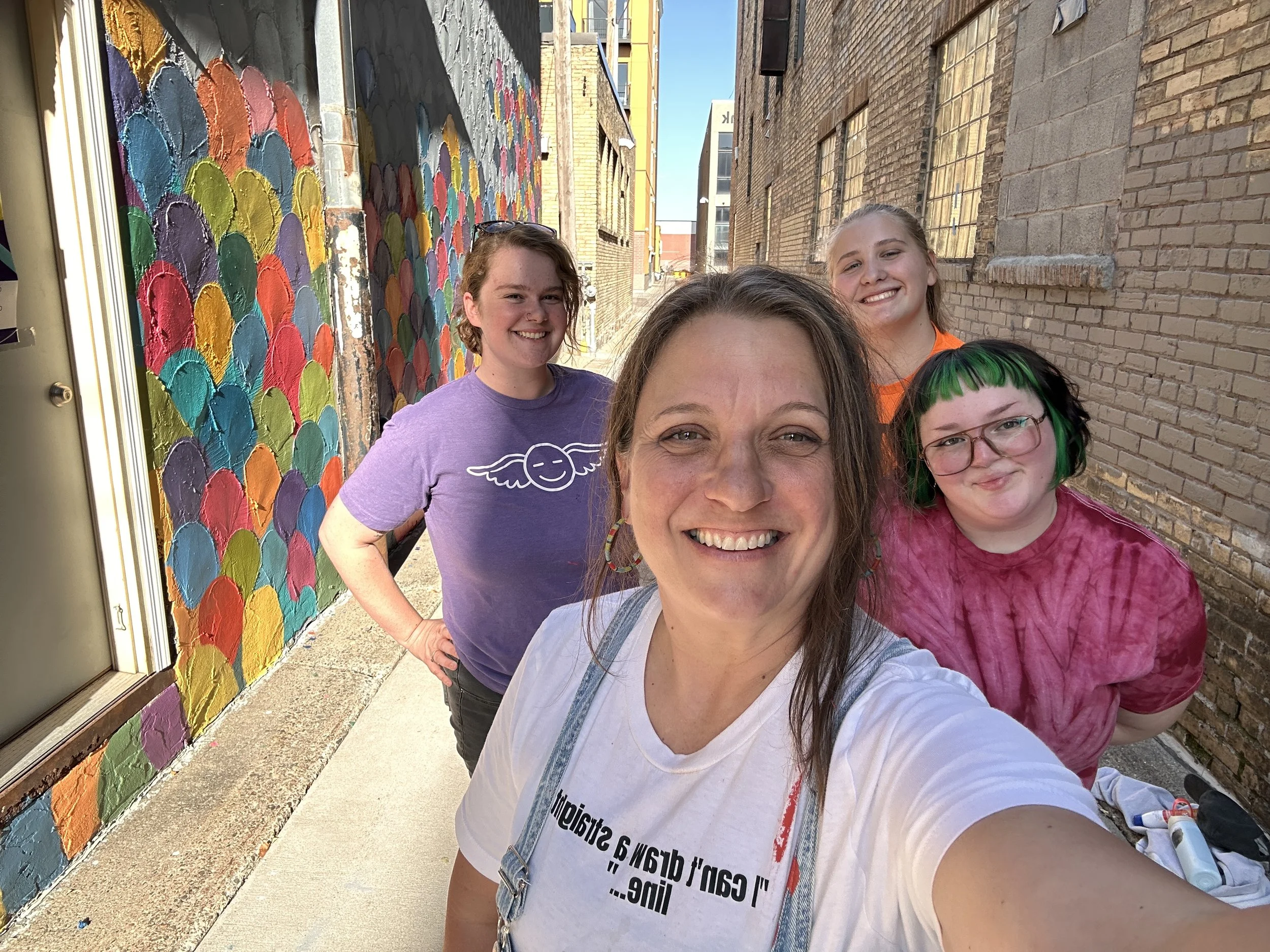
Exhausted but cute. :)
September arrived. Time to paint.
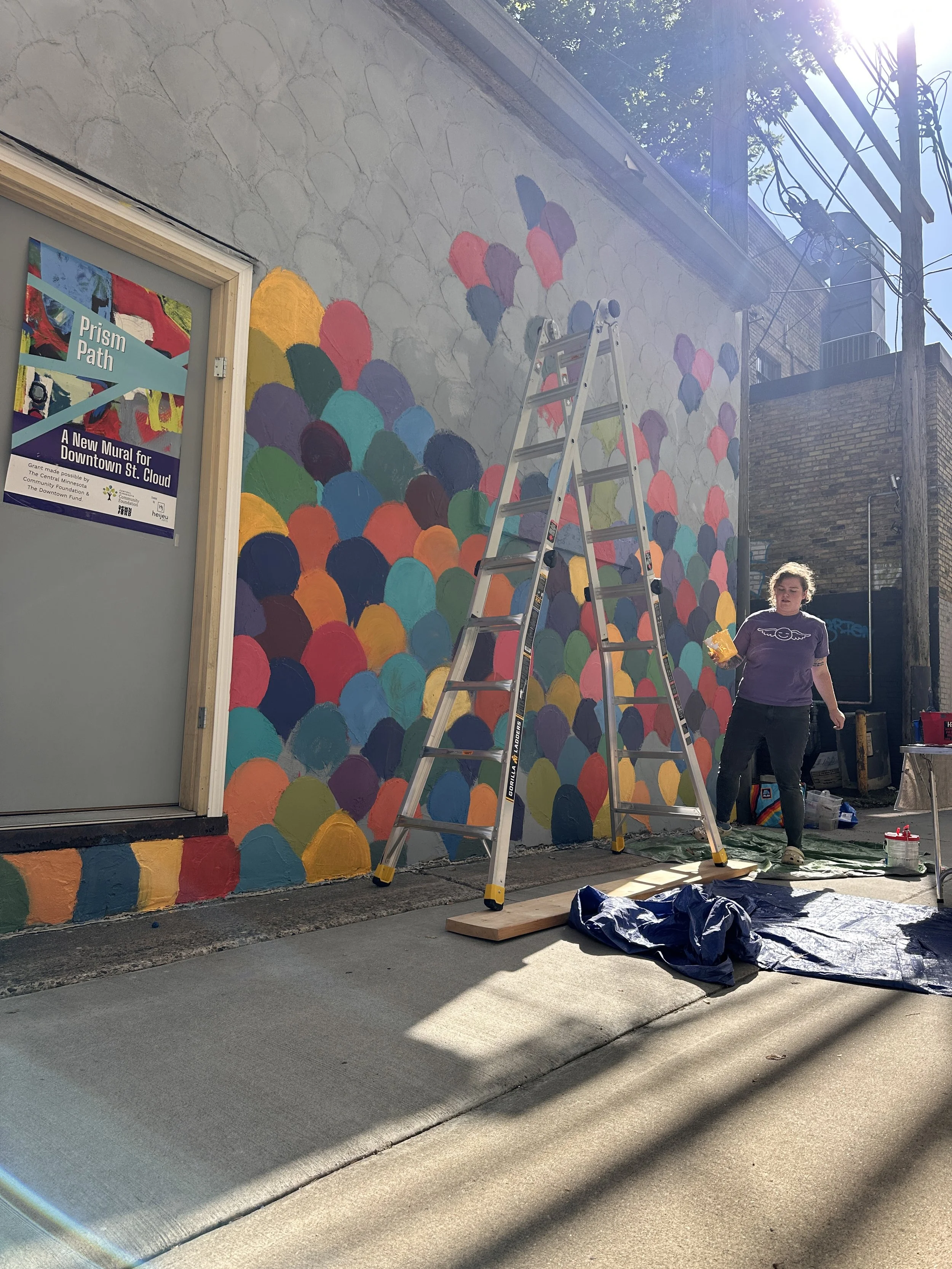
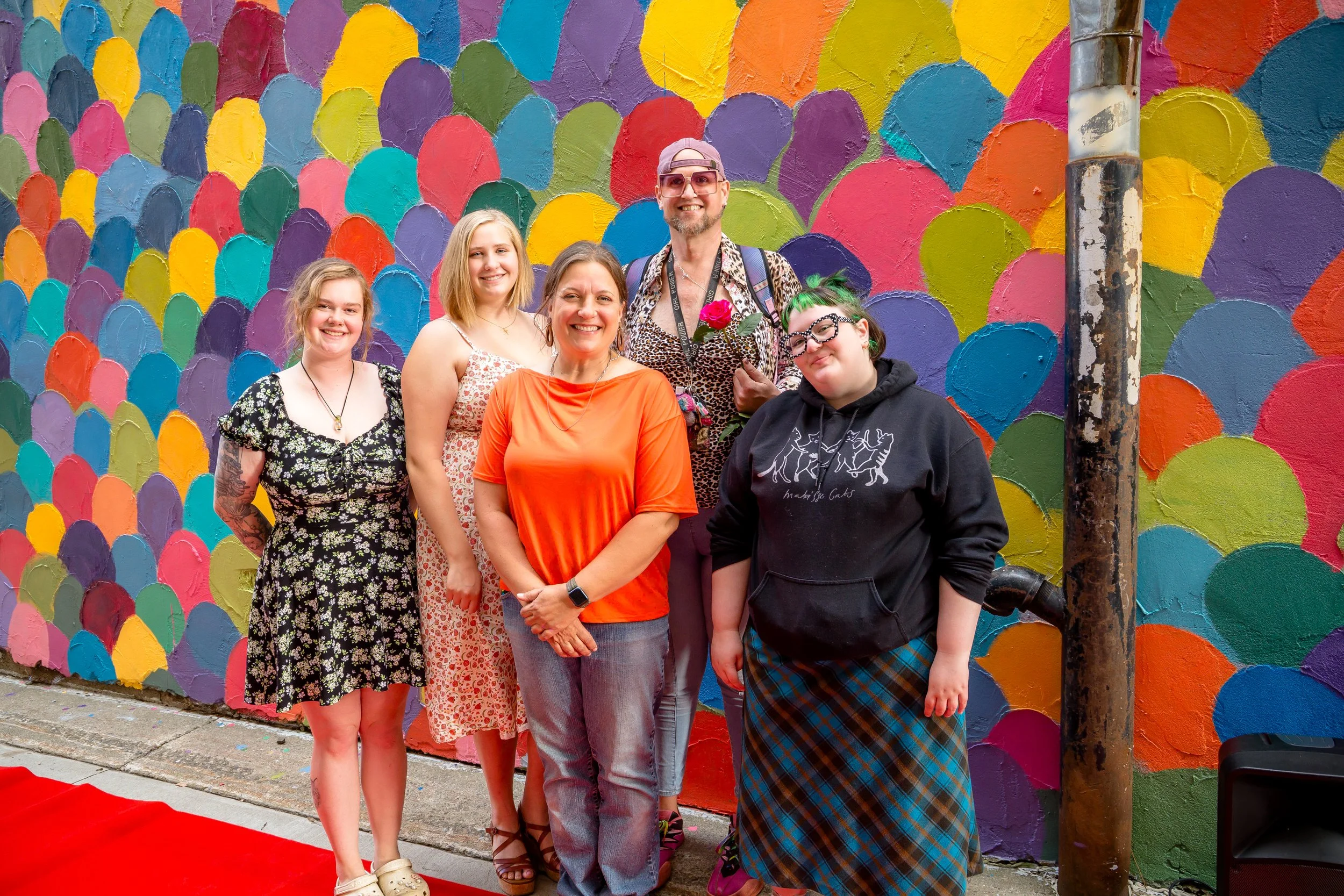
Our team showed up: me, Chloe Luther, Breanna Rhodes, and Else Roenfeldt. Four artists ready to bring this to life.
But the wall had other plans.
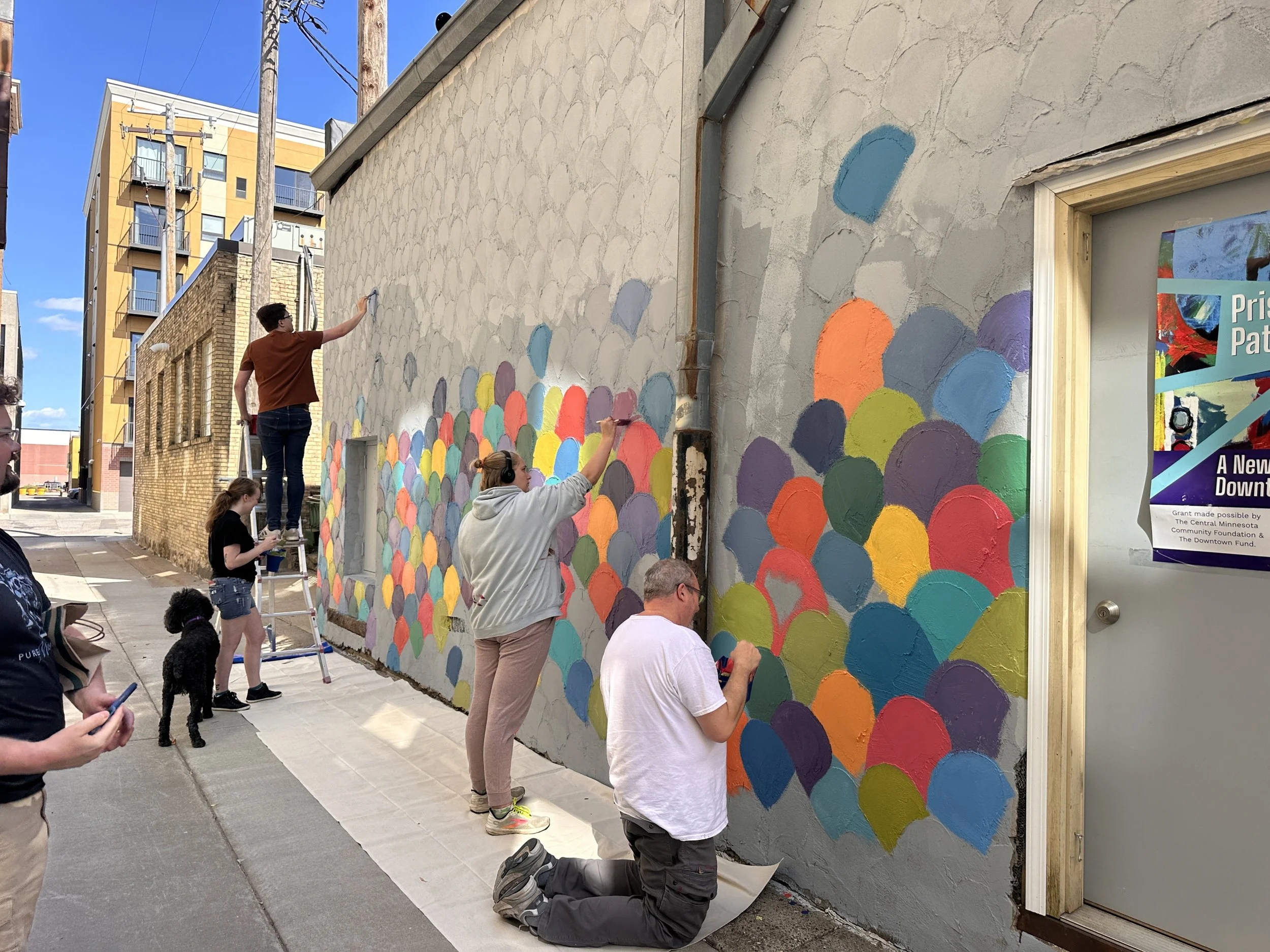
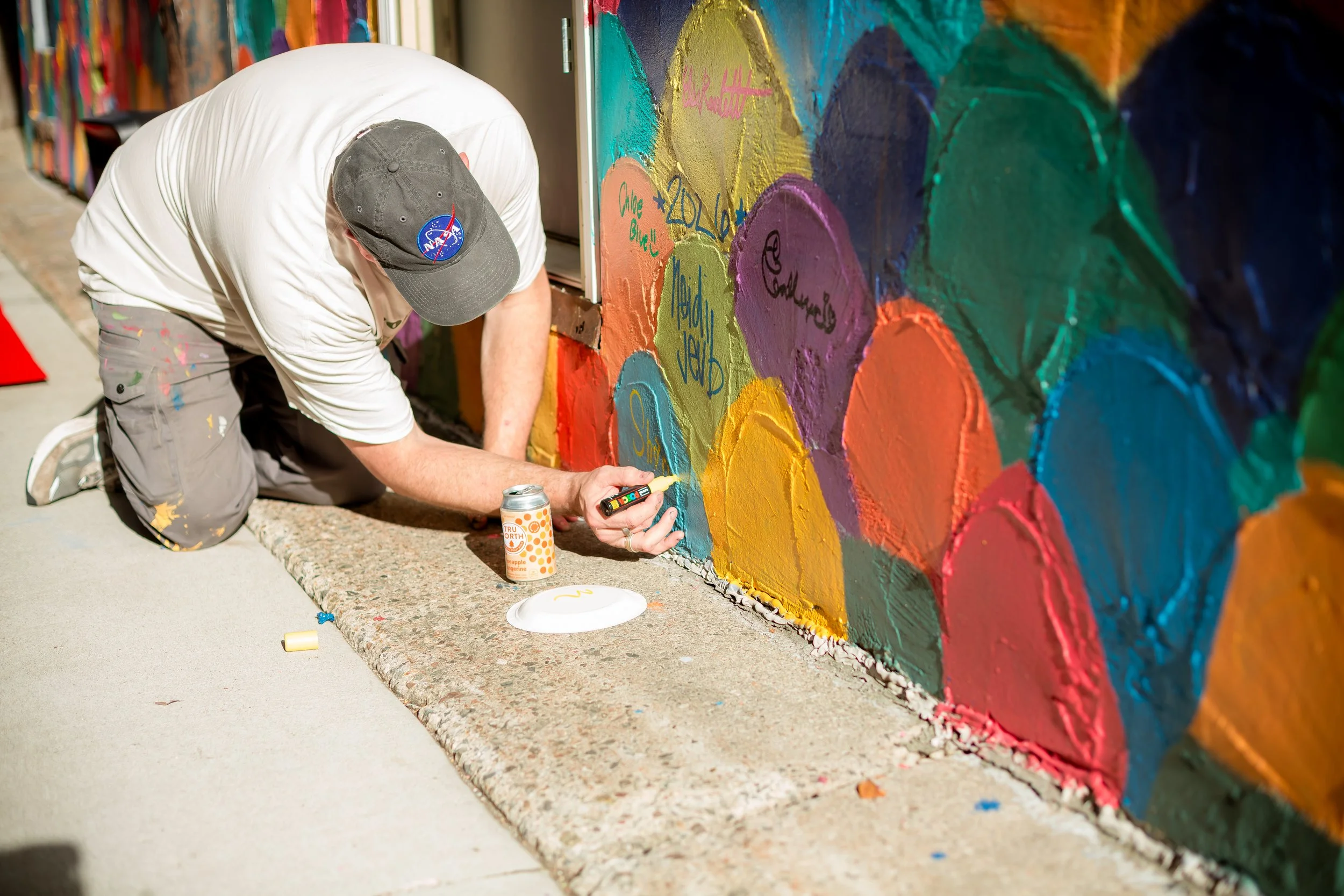
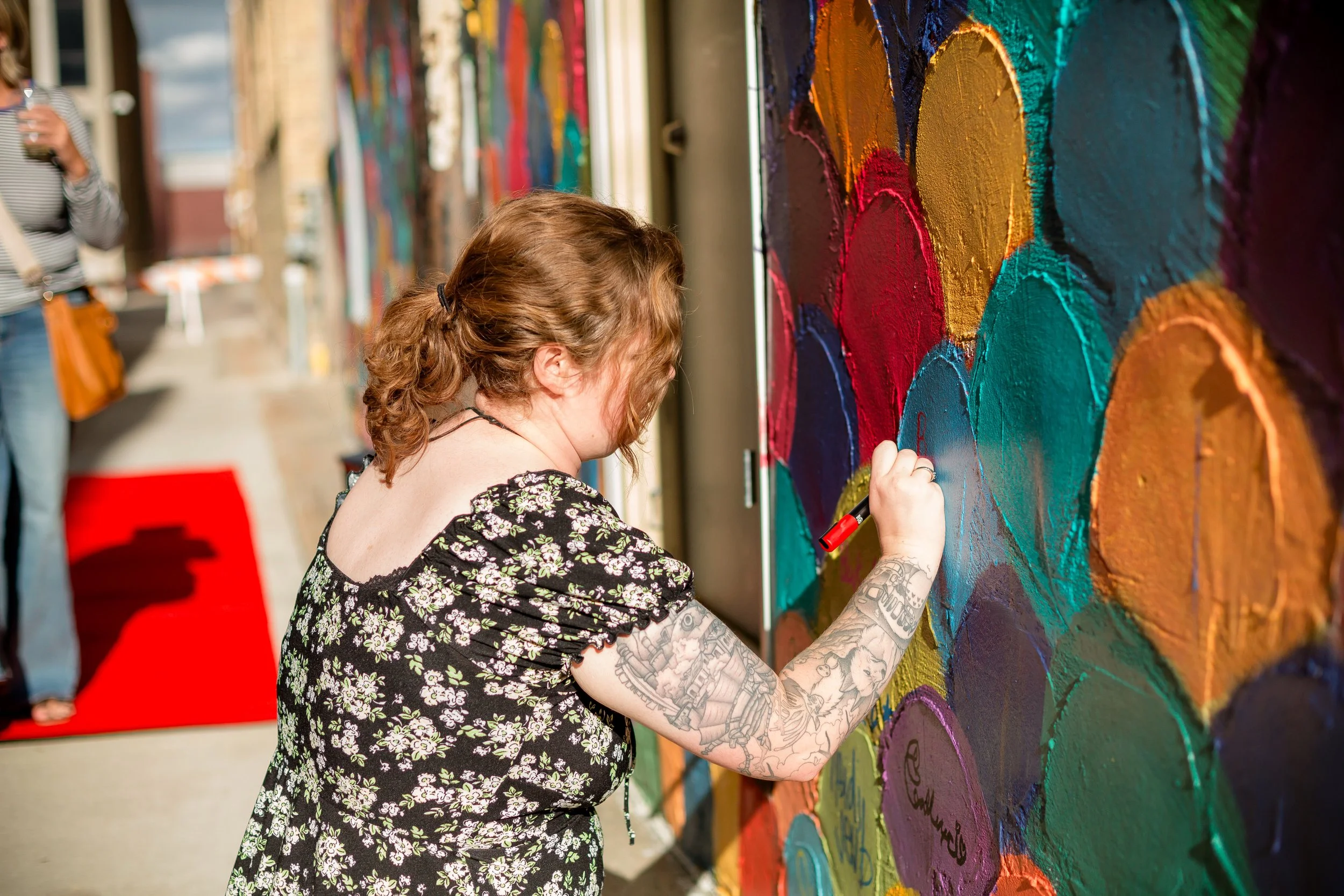
The stucco texture was unpredictable—more textured than we'd anticipated. Standard painting techniques weren't going to work. We couldn't be rigid about the pattern. We had to stay loose, adapt in real-time, trust the process.
This is where professional arts experience pays off. The teaching artists shifted techniques on the fly. Loose brushwork. Flexibility. Presence.
We had doubts. But we kept going.
And something beautiful happened.
THE VOLUNTEERS: WHEN PEOPLE SHOW UP
Here's what surprised me most: we didn't recruit volunteers. They appeared.
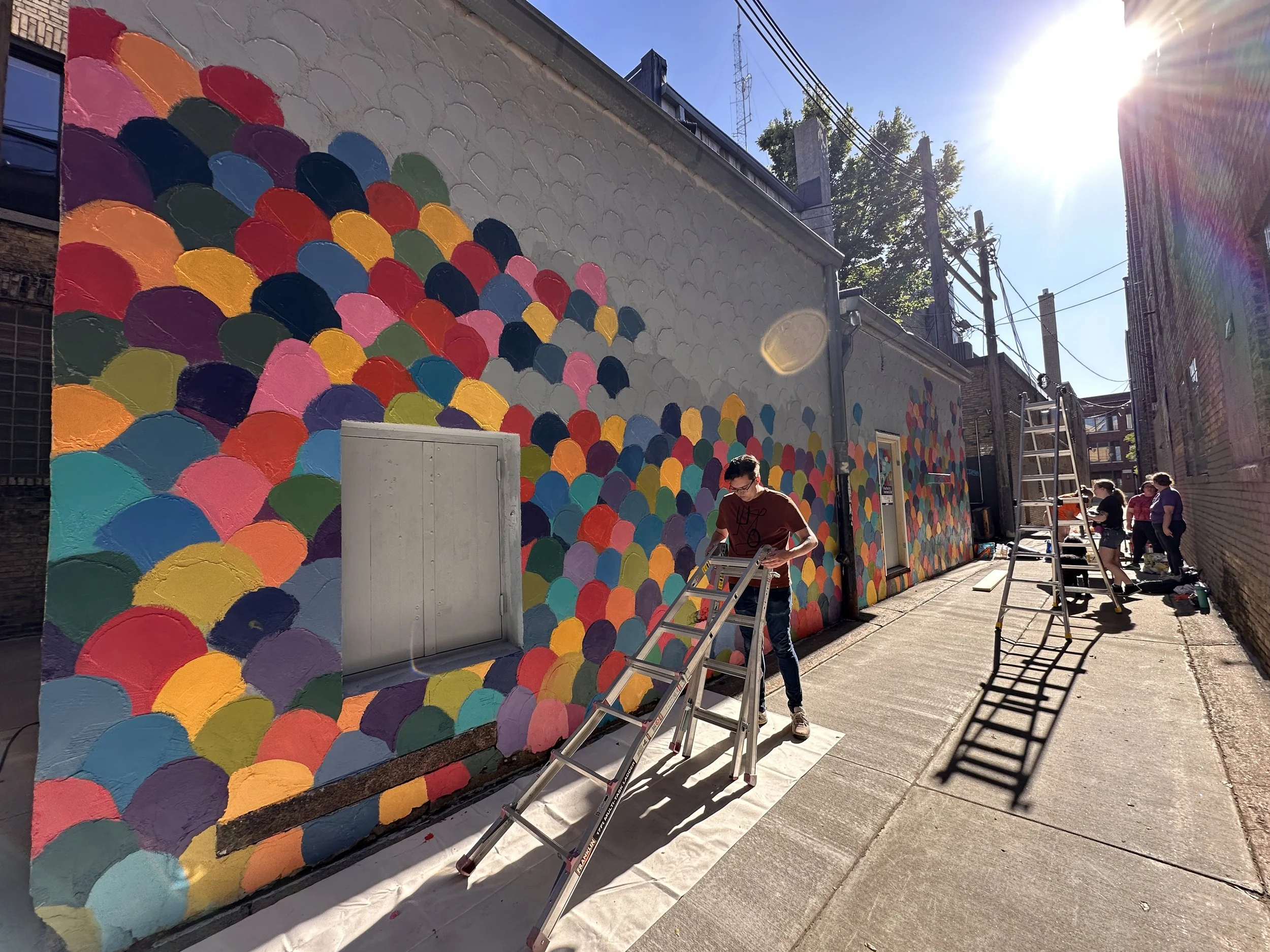
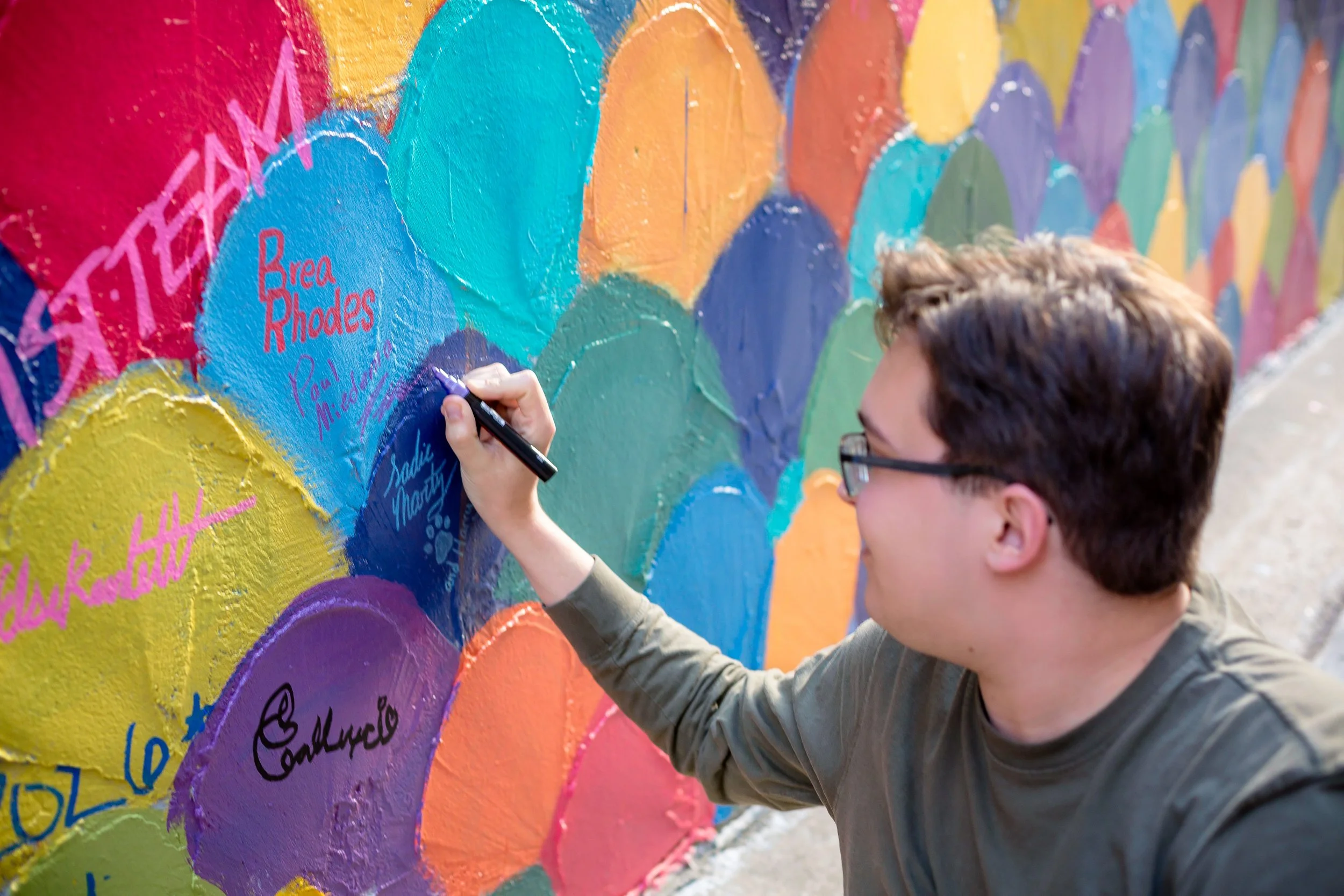
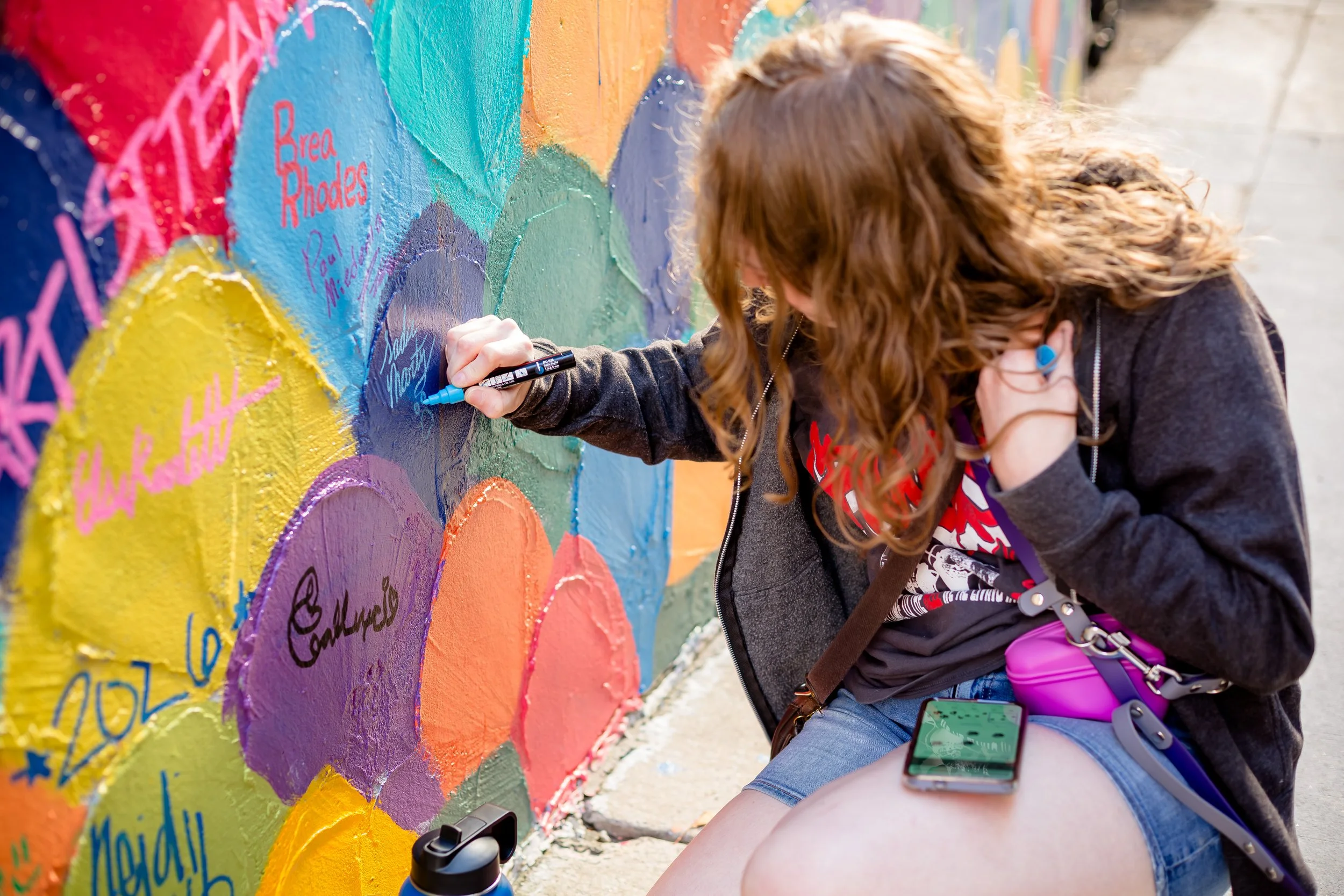
A veteran came through word of mouth, looking for something to do. A neighbor saw the project on social media and offered her days off. Friends of the artists joined in. By the end, we had 7 volunteers—people who showed up because they believed in what we were building.
One volunteer told me afterward: "I had a really fun morning and early afternoon volunteering. I really enjoyed working with everyone there. I so love art and all artists. What a wonderful experience to be a part of. Thank you so much."
That's community. Not requested. Not recruited. Just showing up.
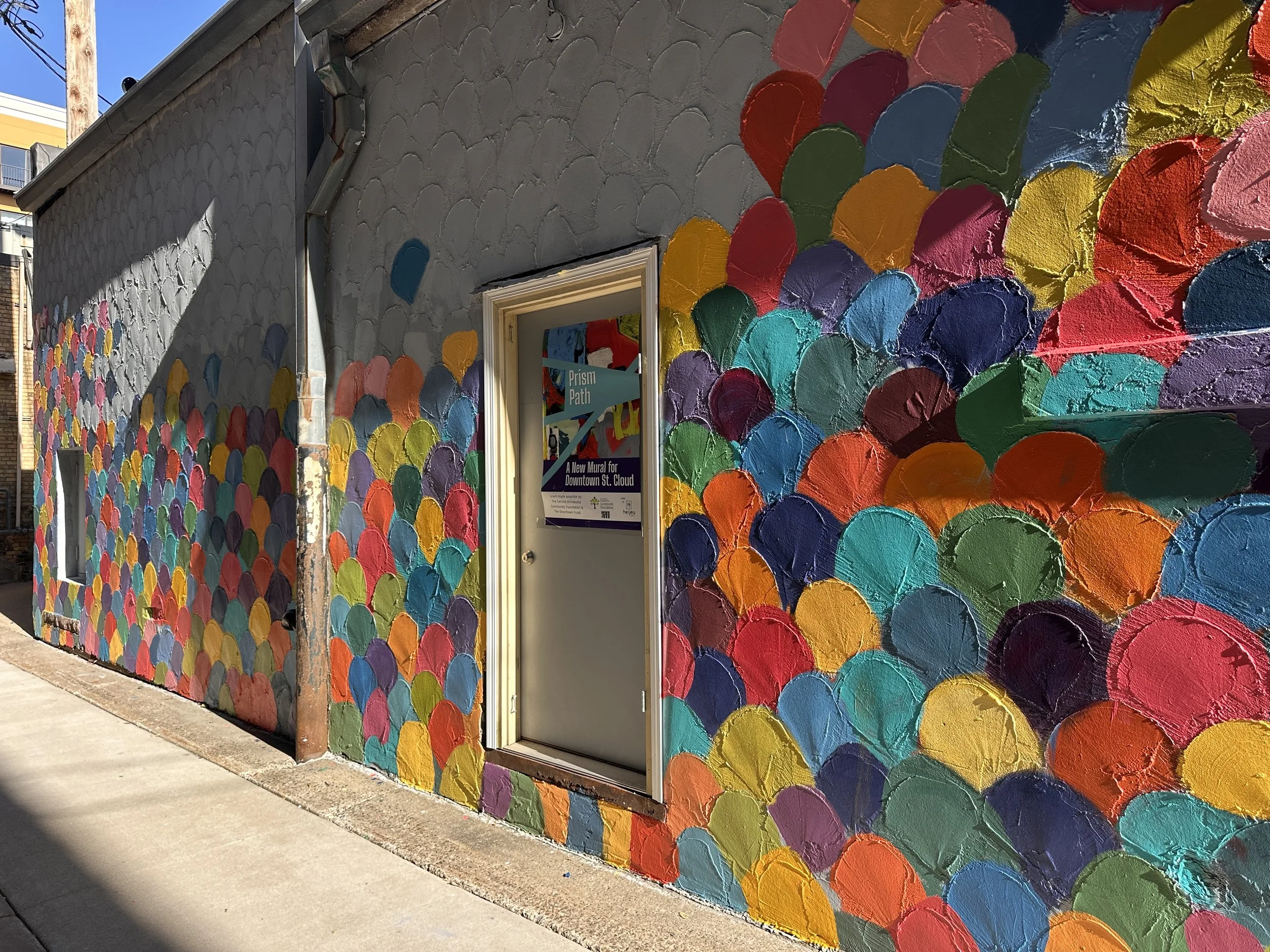
THE UNVEILING: SEPTEMBER 17
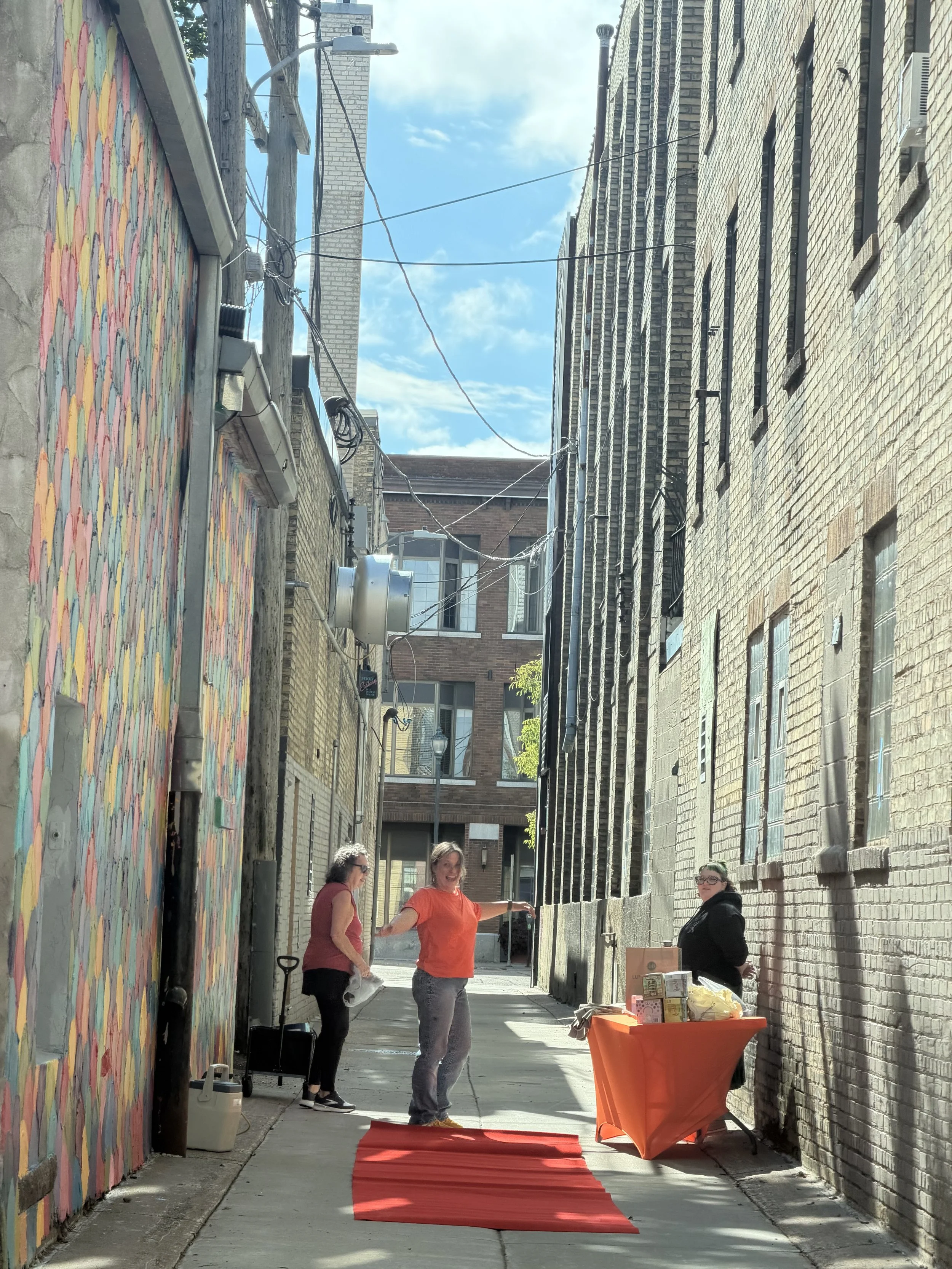
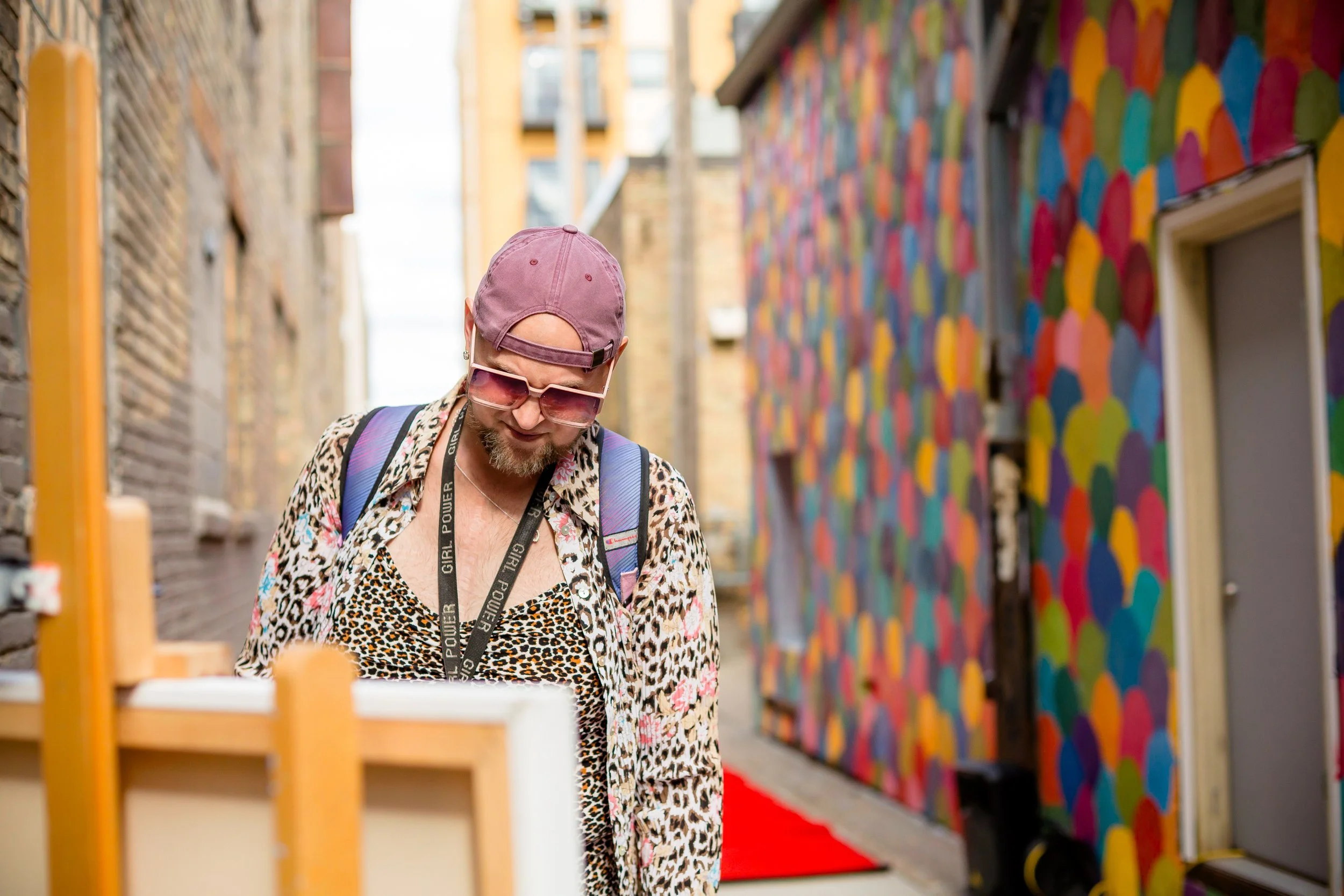
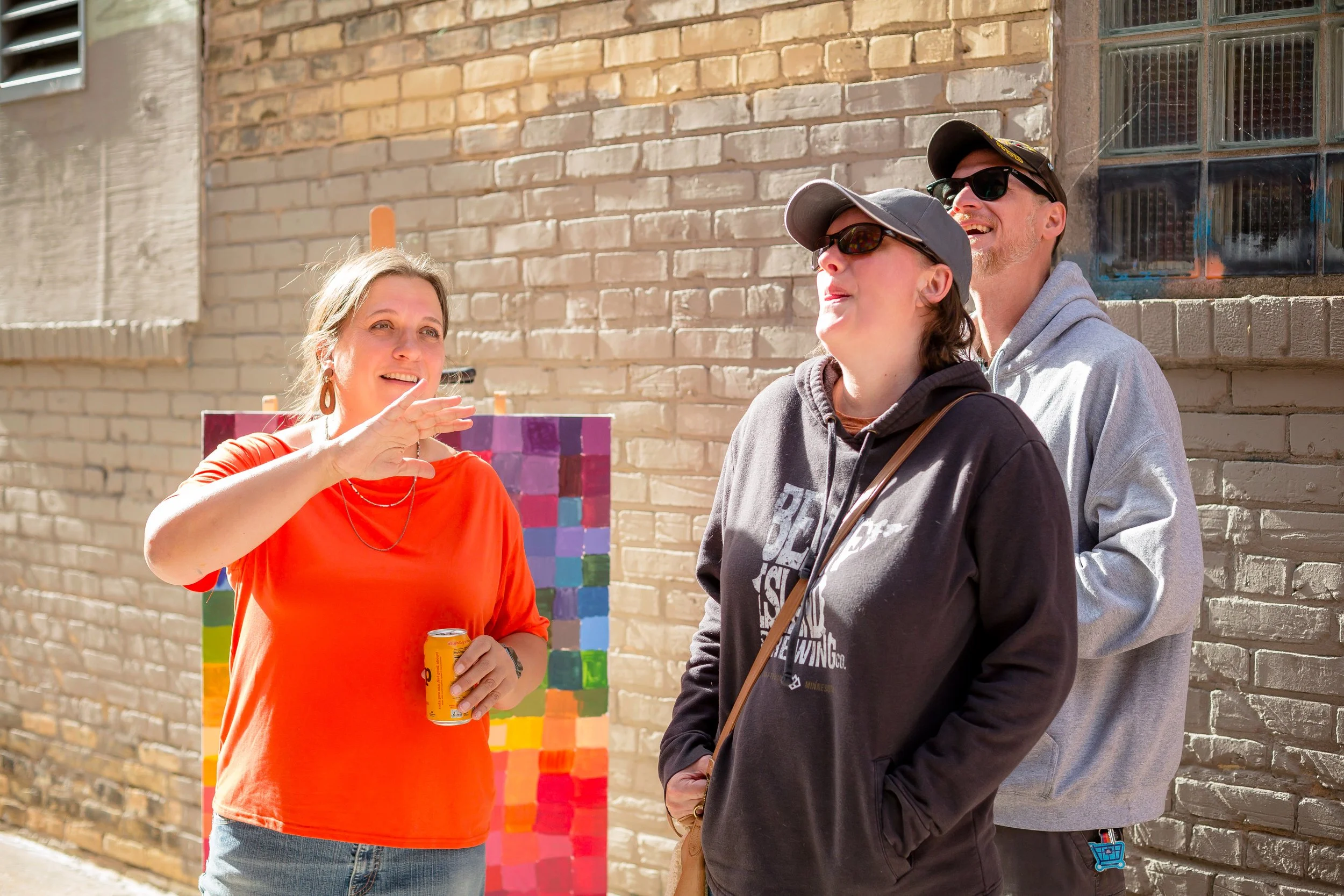
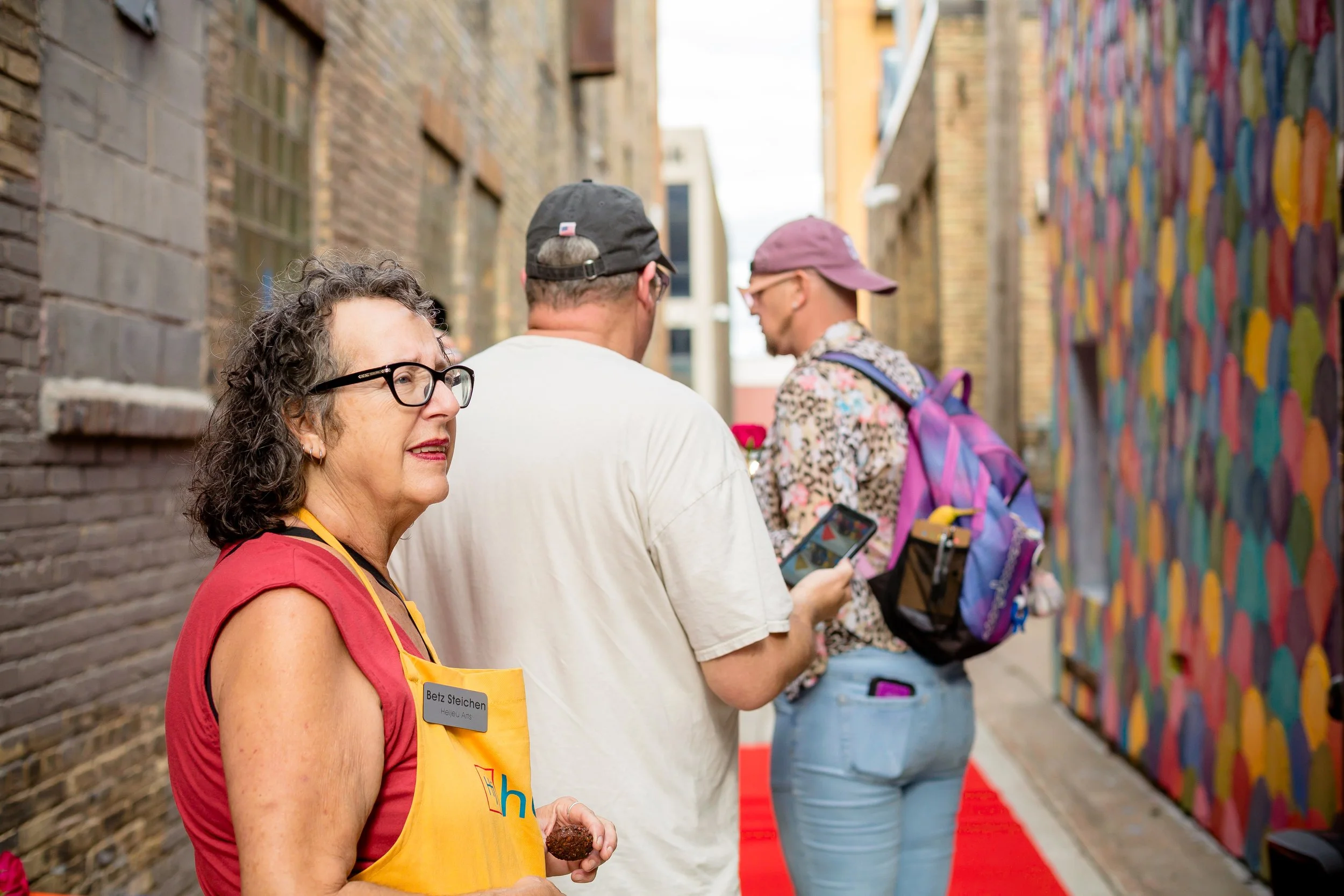
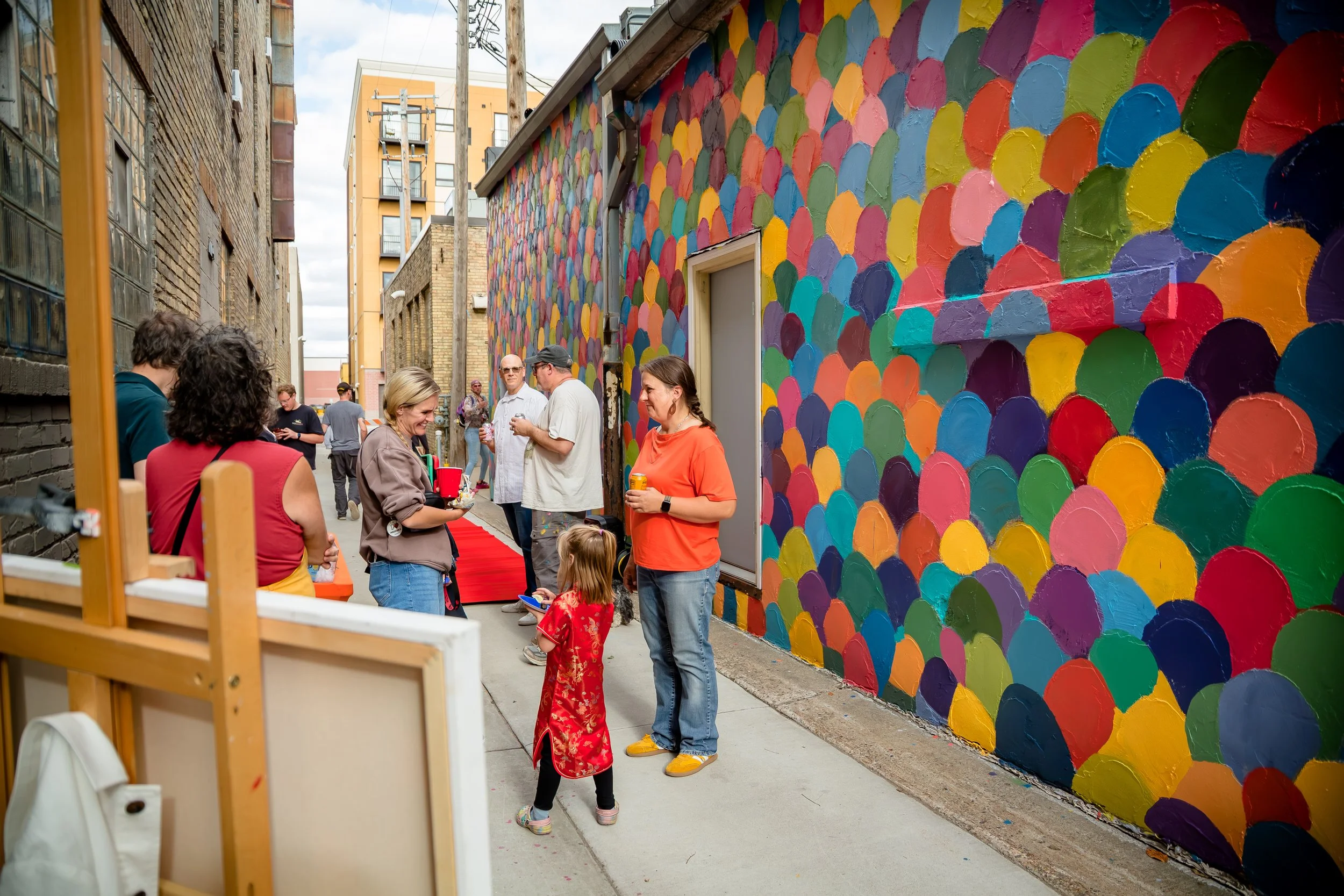
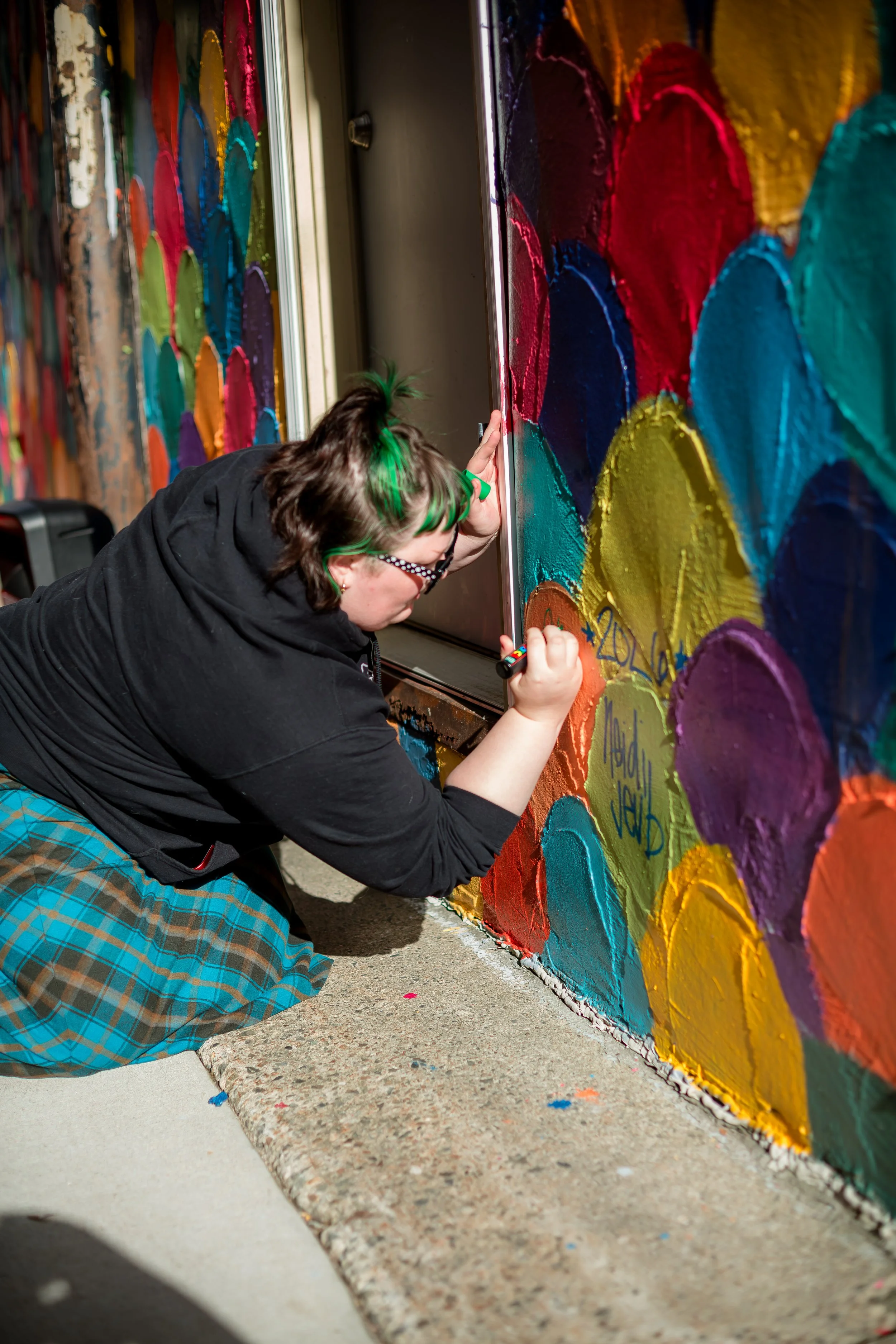
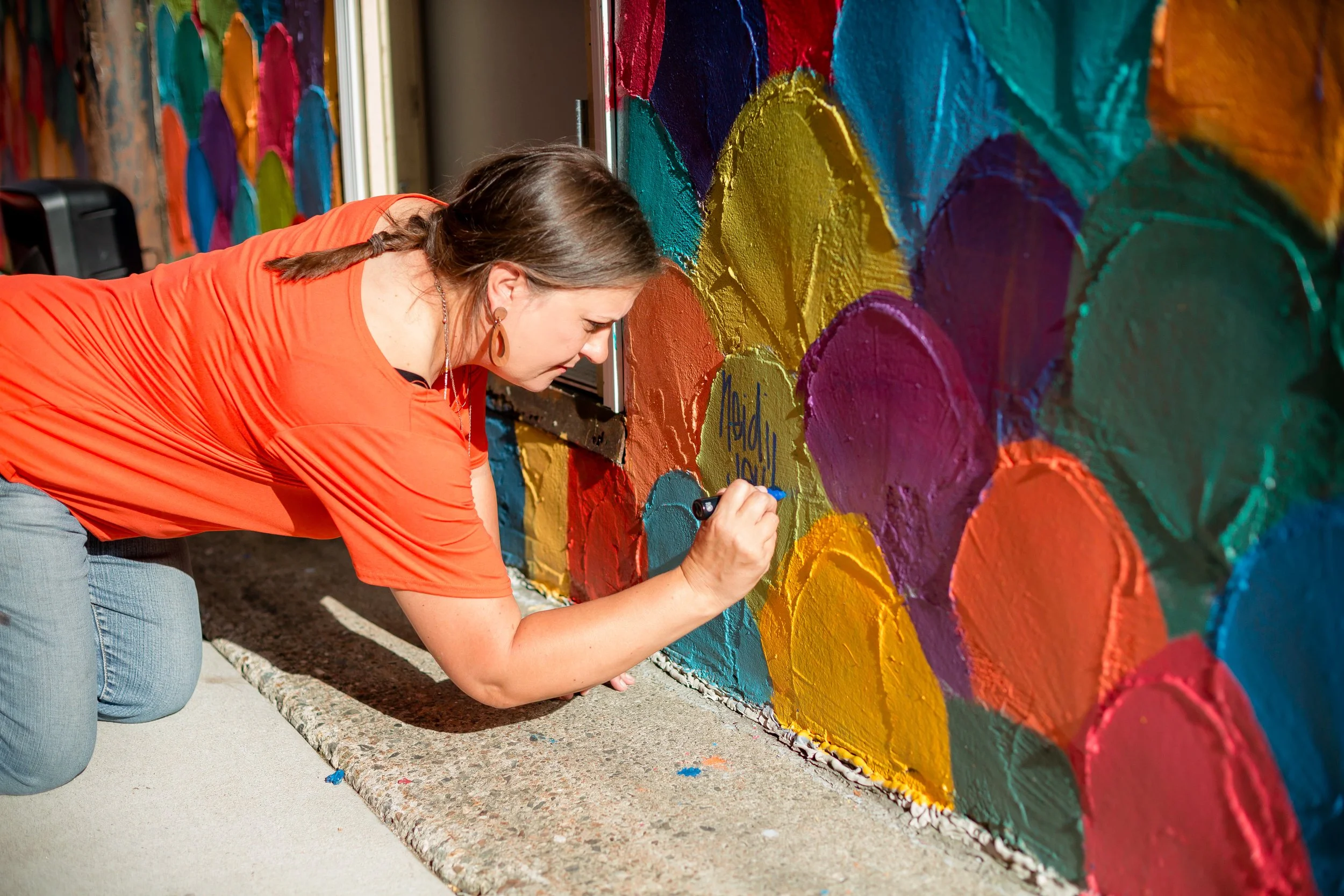
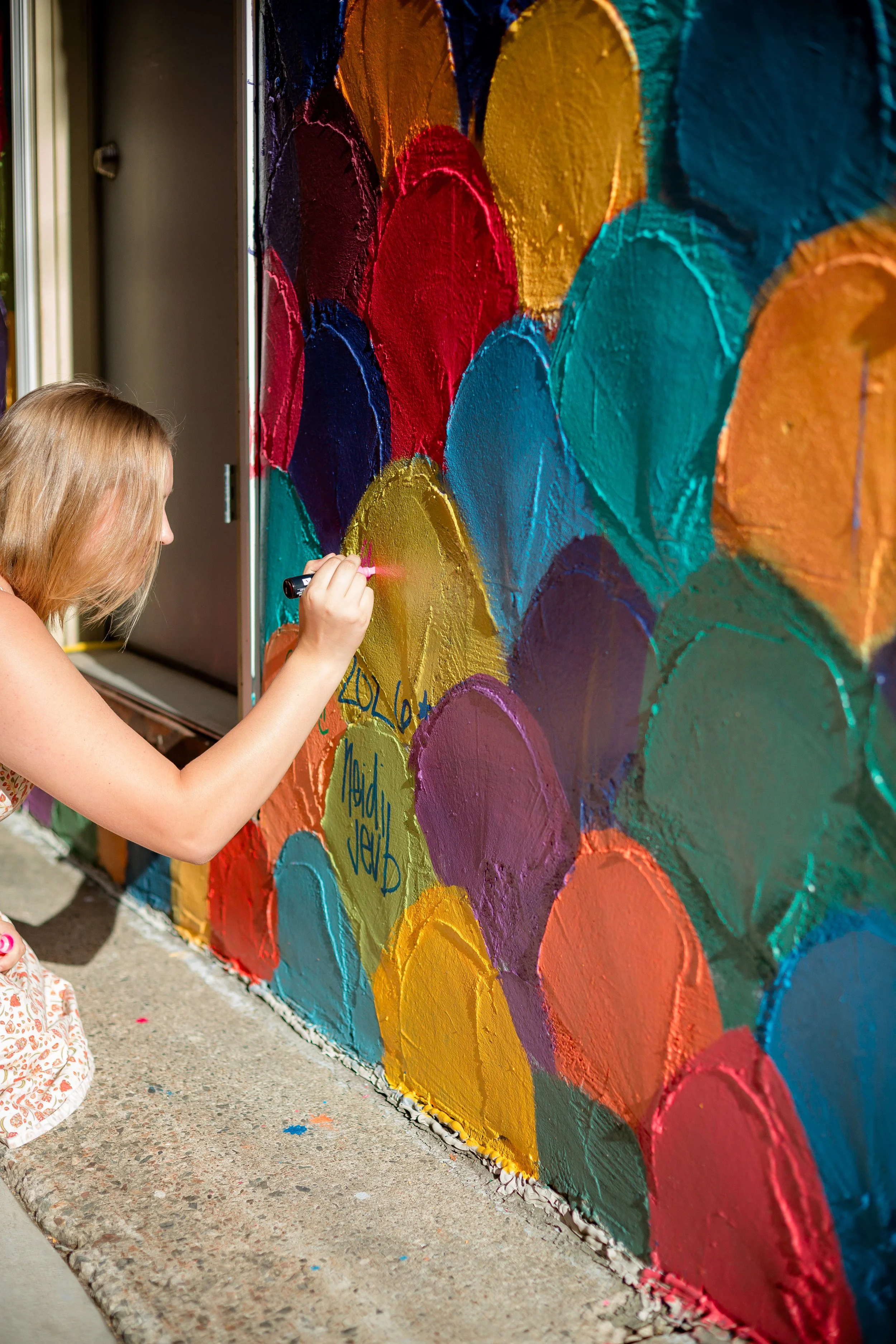
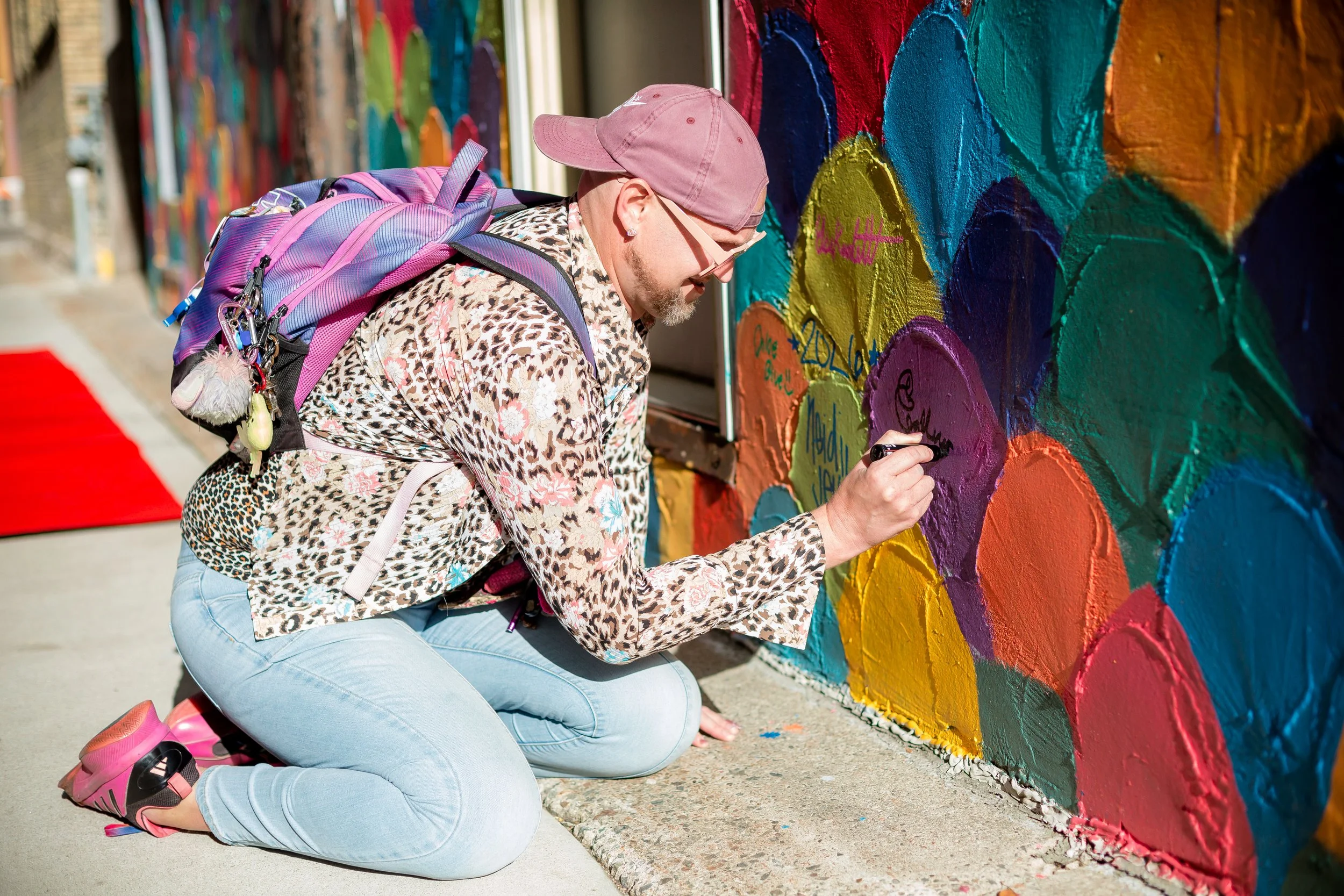
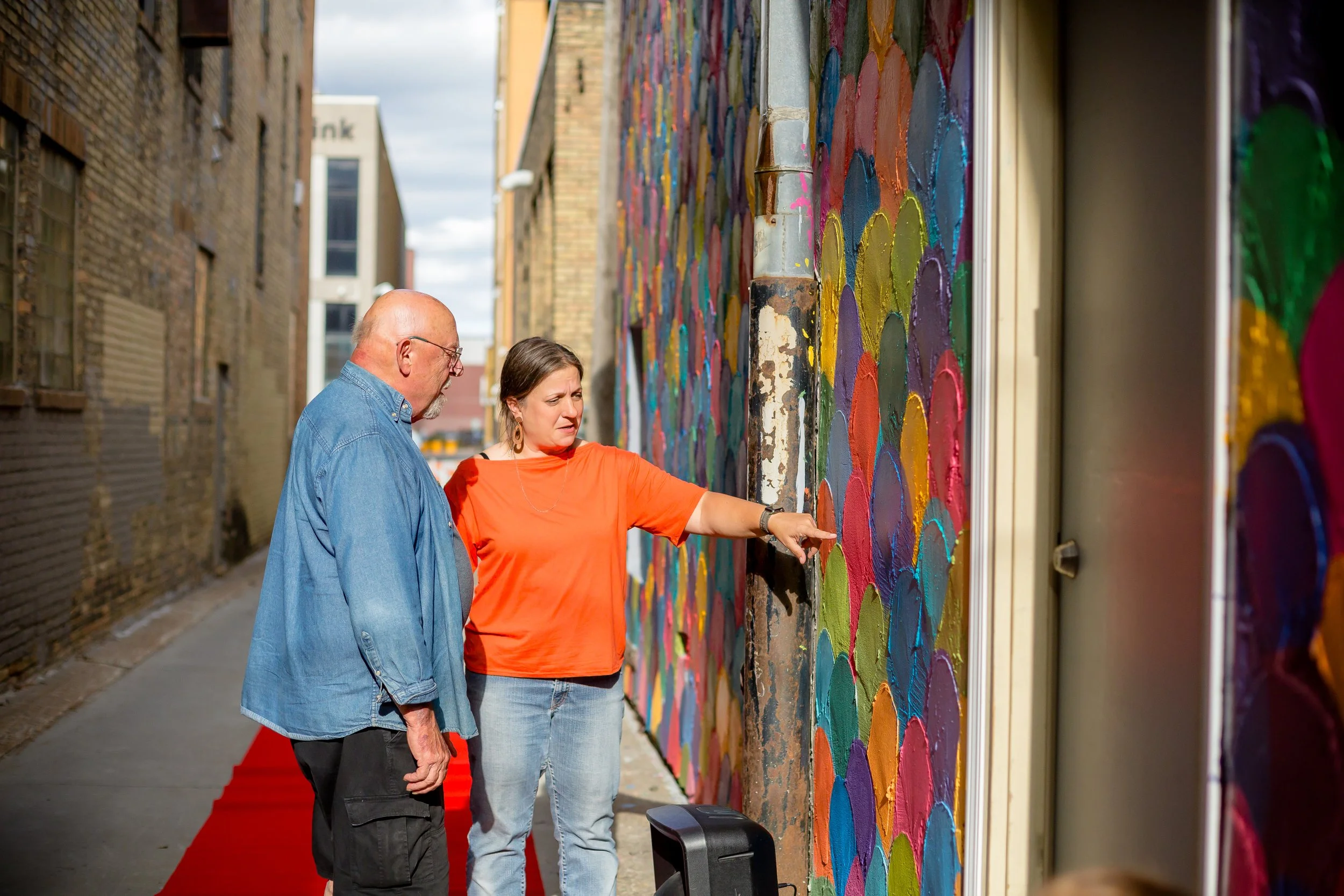
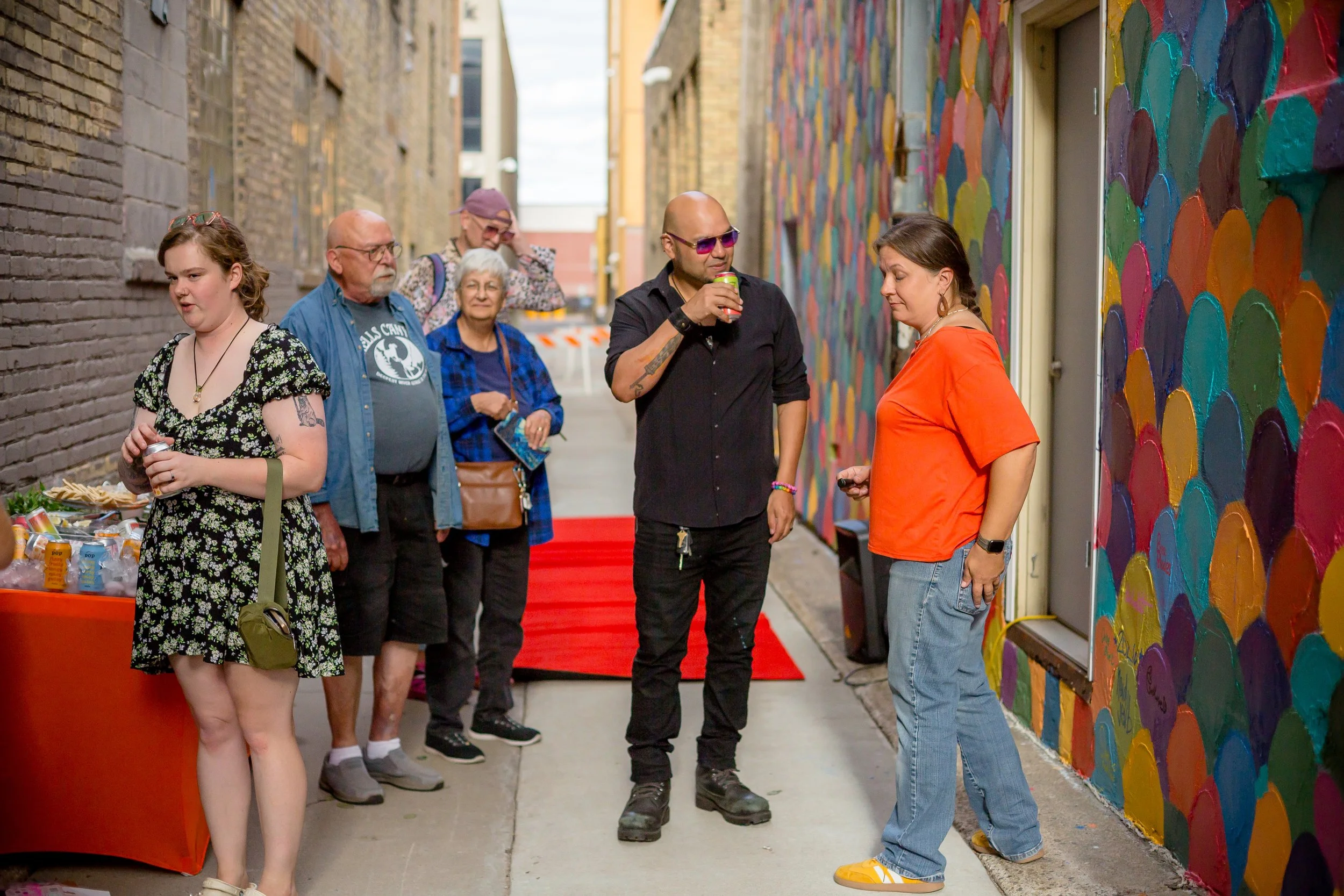
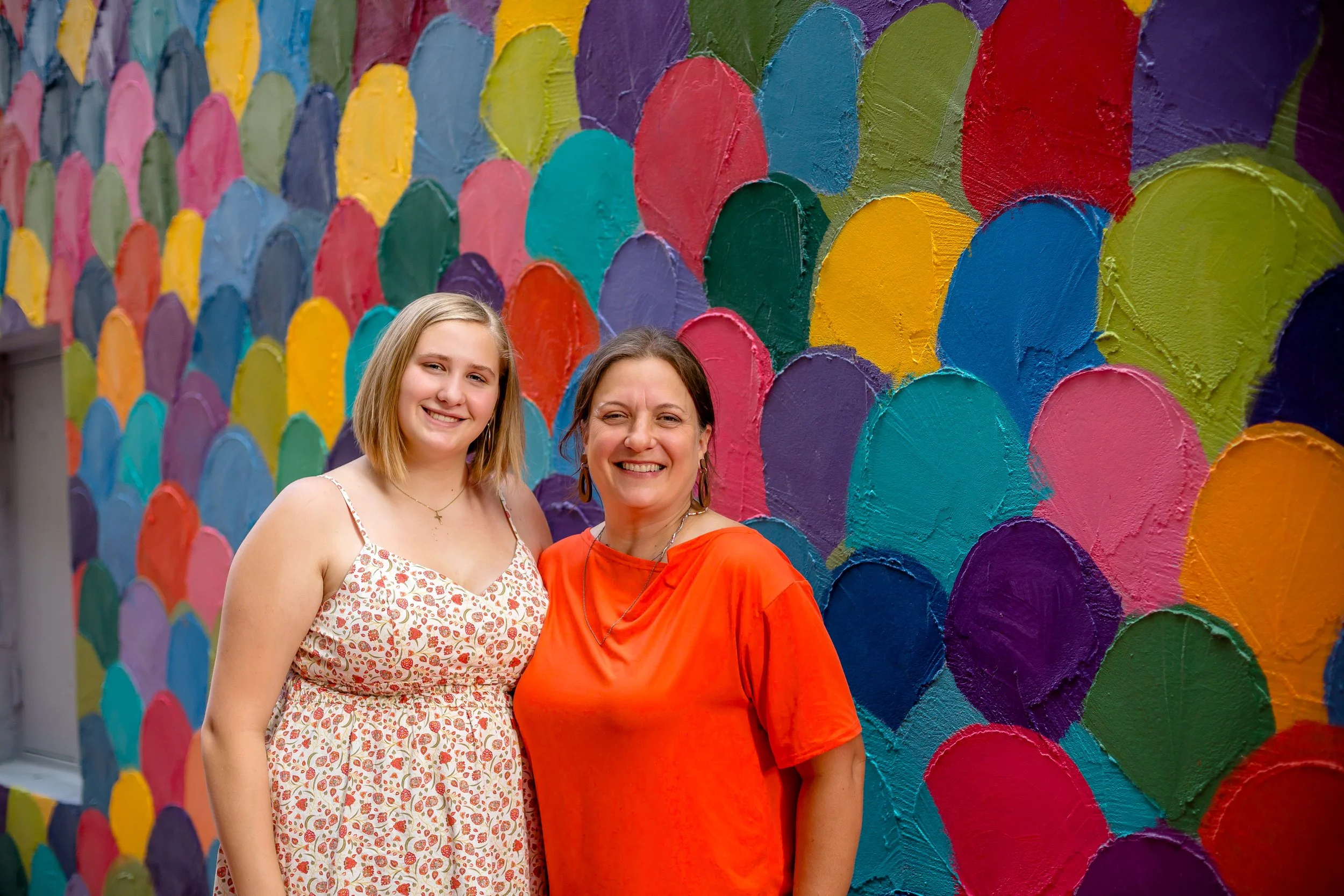
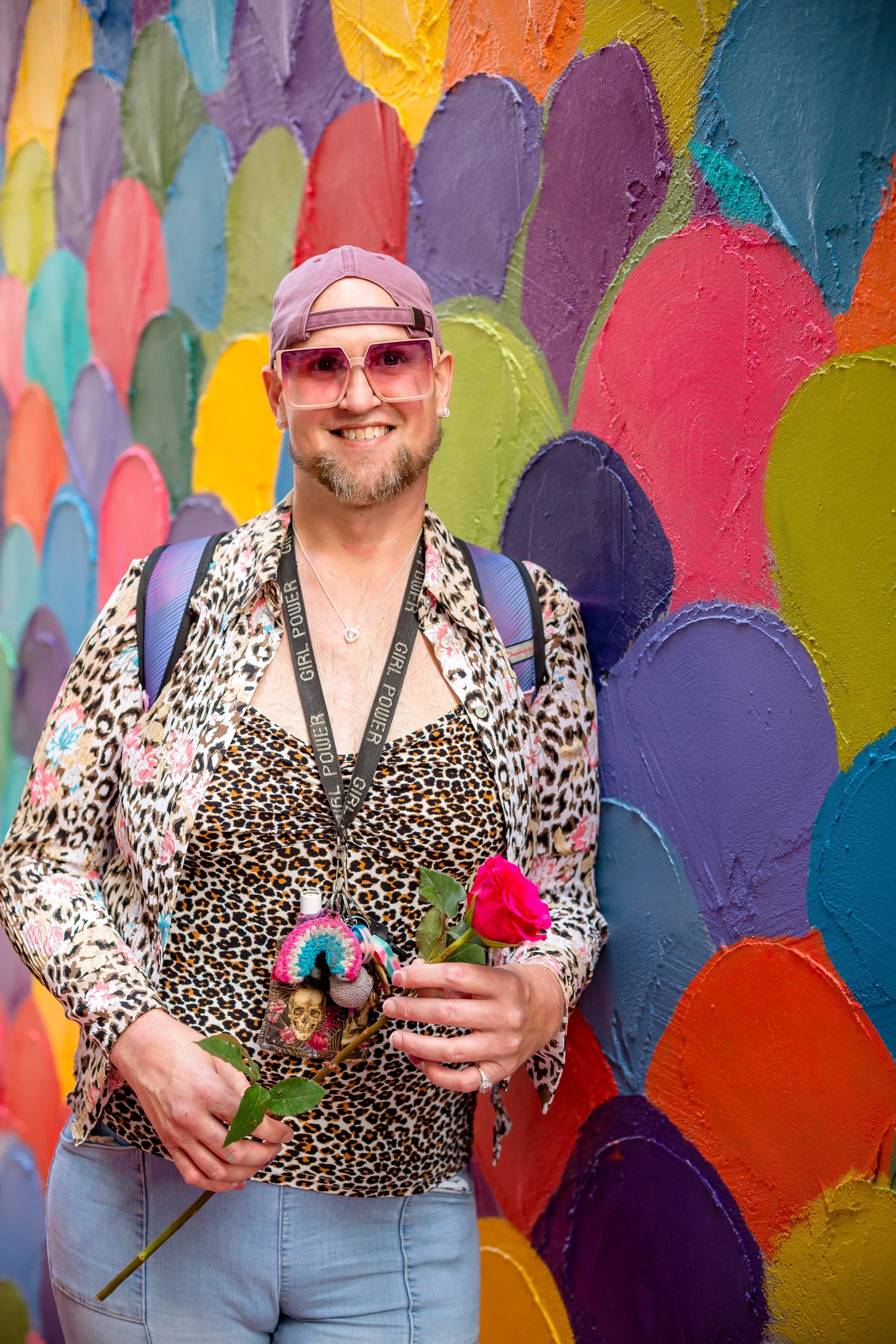
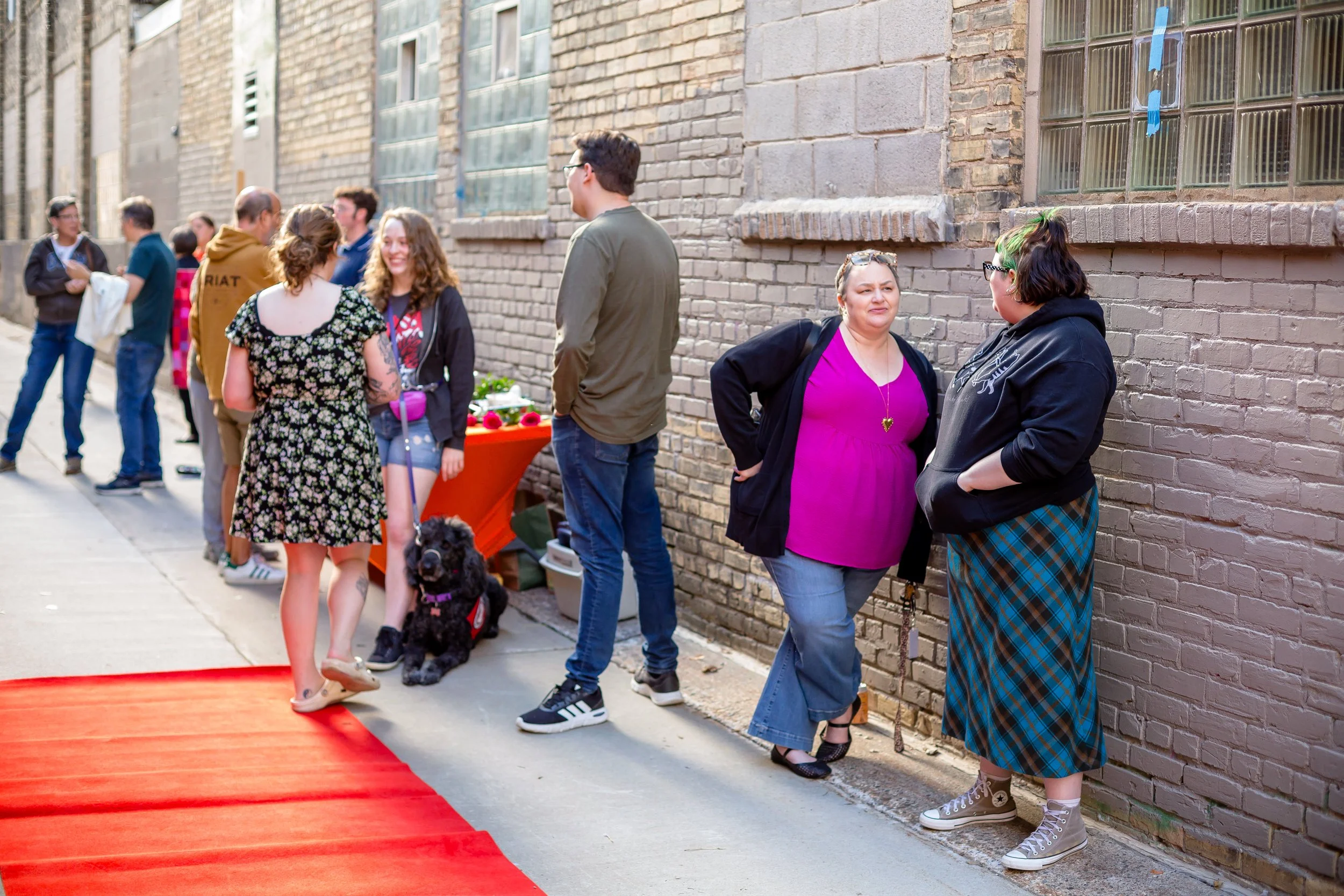
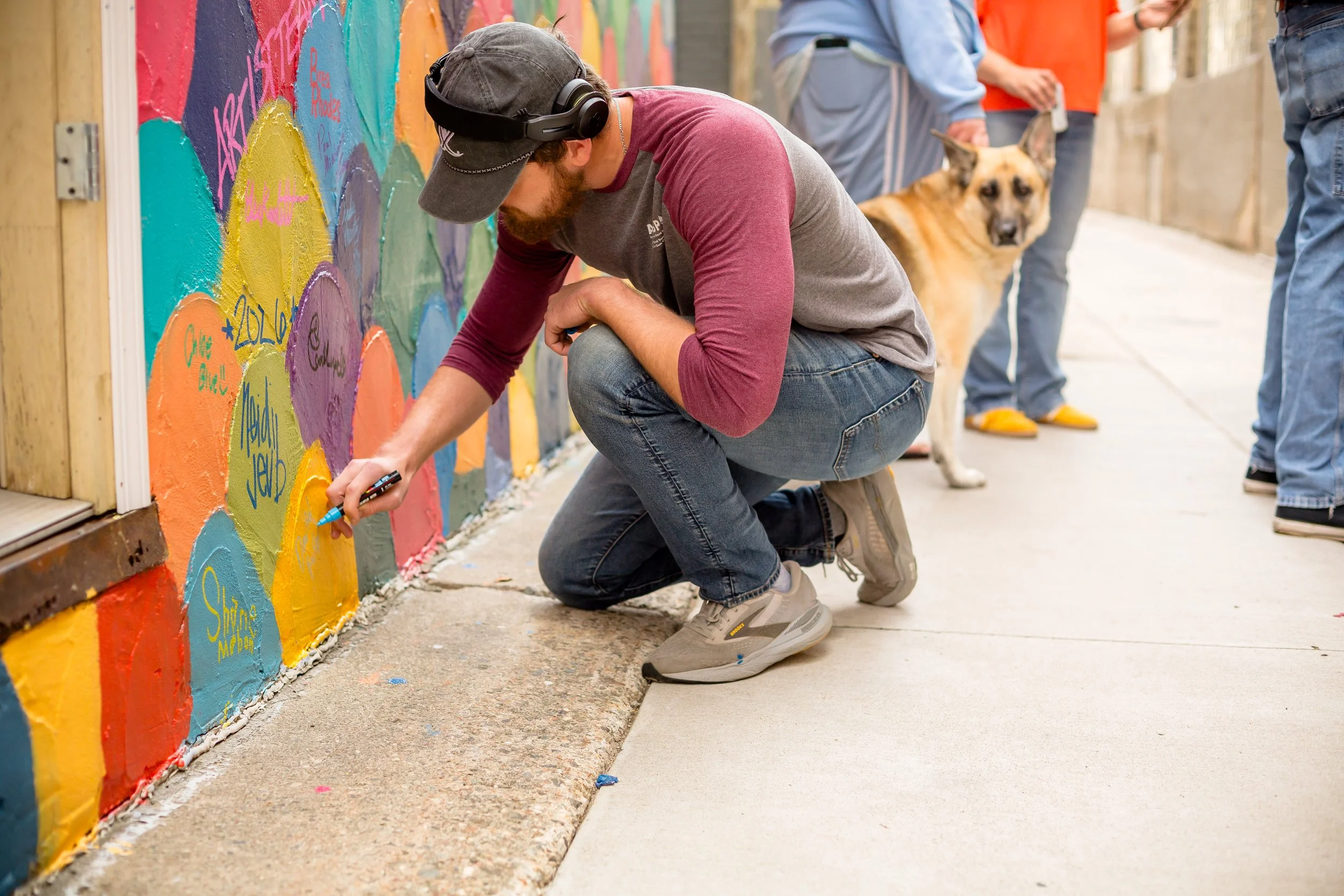
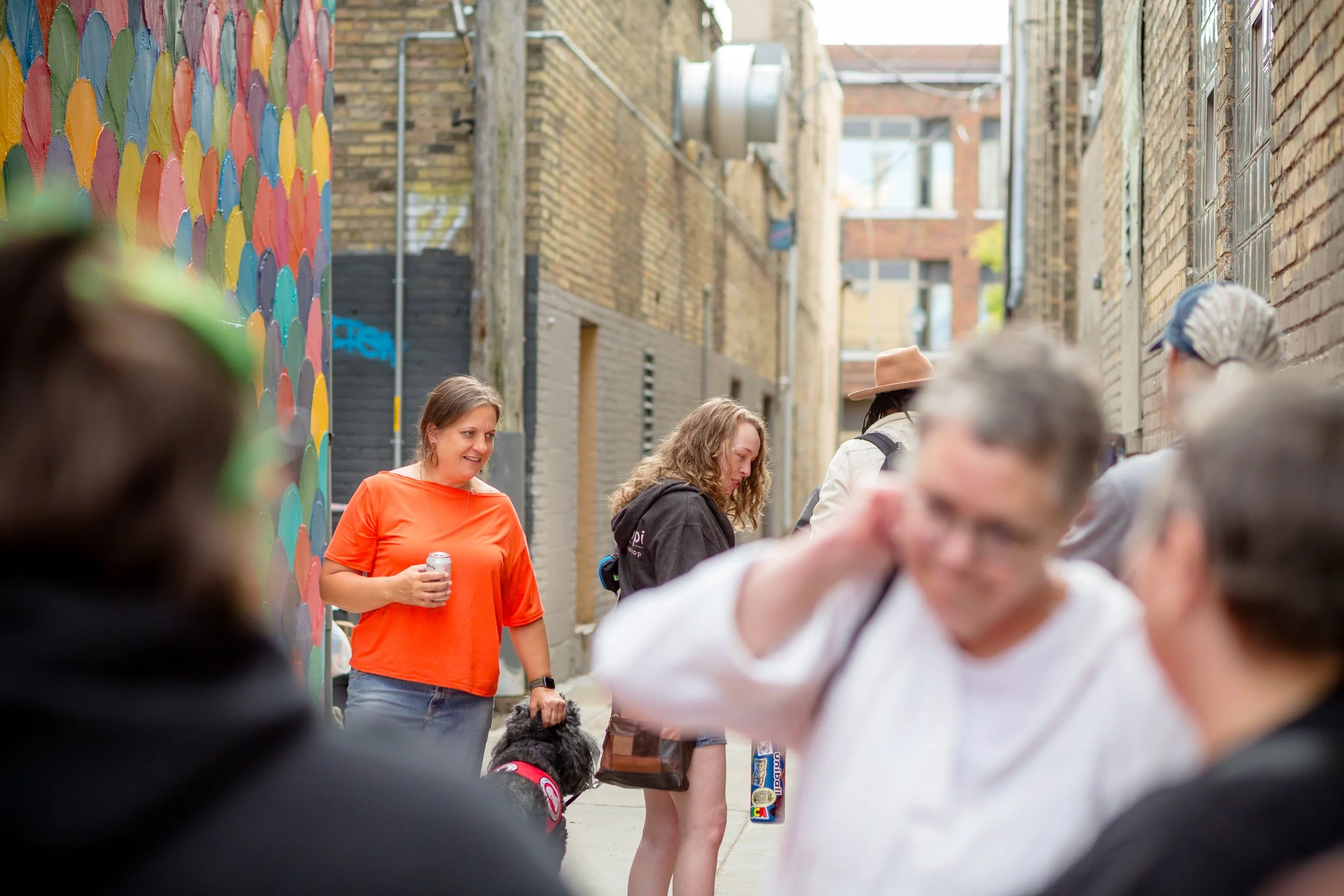
On a sunny September afternoon, about 20 people gathered in that alley. The same alley that used to be forgettable. Now it was vibrant, full of color, full of story.
We had catering from Greek Cravings. Flowers from Green Thumb, Etc. A red carpet donated by Tyler Bevier to make it extra special. A photographer documenting the moment.
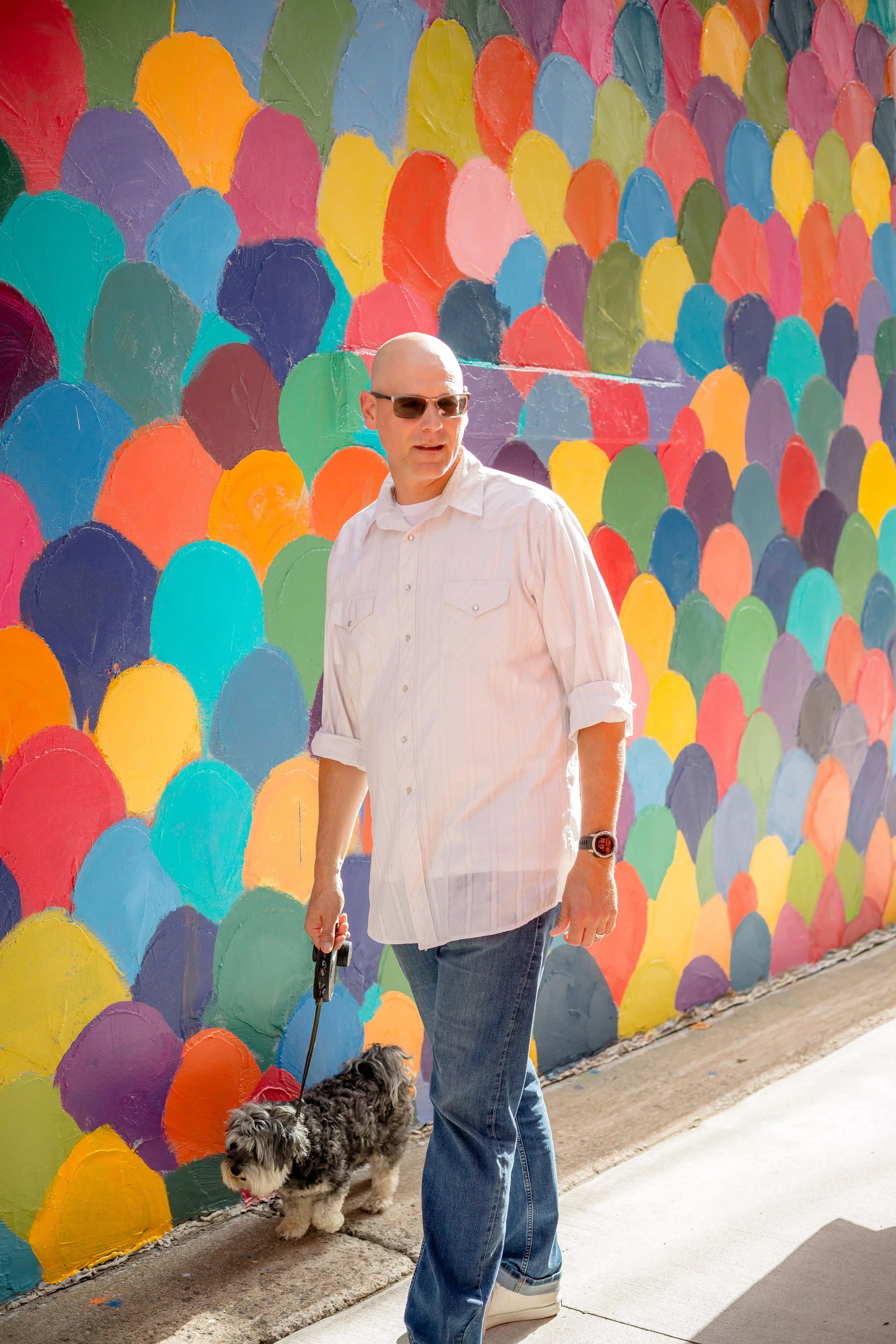
People walked through and talked about what they saw. Some stood in front of the mural and smiled. One person told me: "It literally brightens my every day. Walking past that alley and seeing the bright colors is a reminder of the vibrancy that resides within our community."
WJON came and interviewed me about the project. I said something I meant: "What I love is that people came through here saying they wanted to do a mural in their alleyway, or by their place of work. I personally think that is an awesome way to ignite people's creativity in looking at a space that's neglected and maybe coming up with a creative way to deal with it."
The mural wasn't just a wall anymore. It was an invitation.
WHAT I LEARNED
Community Feedback Changes Everything
Jon's honesty about colorblindness wasn't a problem to solve. It was an opportunity to be better. We had to dip into other elements and principles of good design— tone, contrast, harmony.. not just color.
People Want to Participate
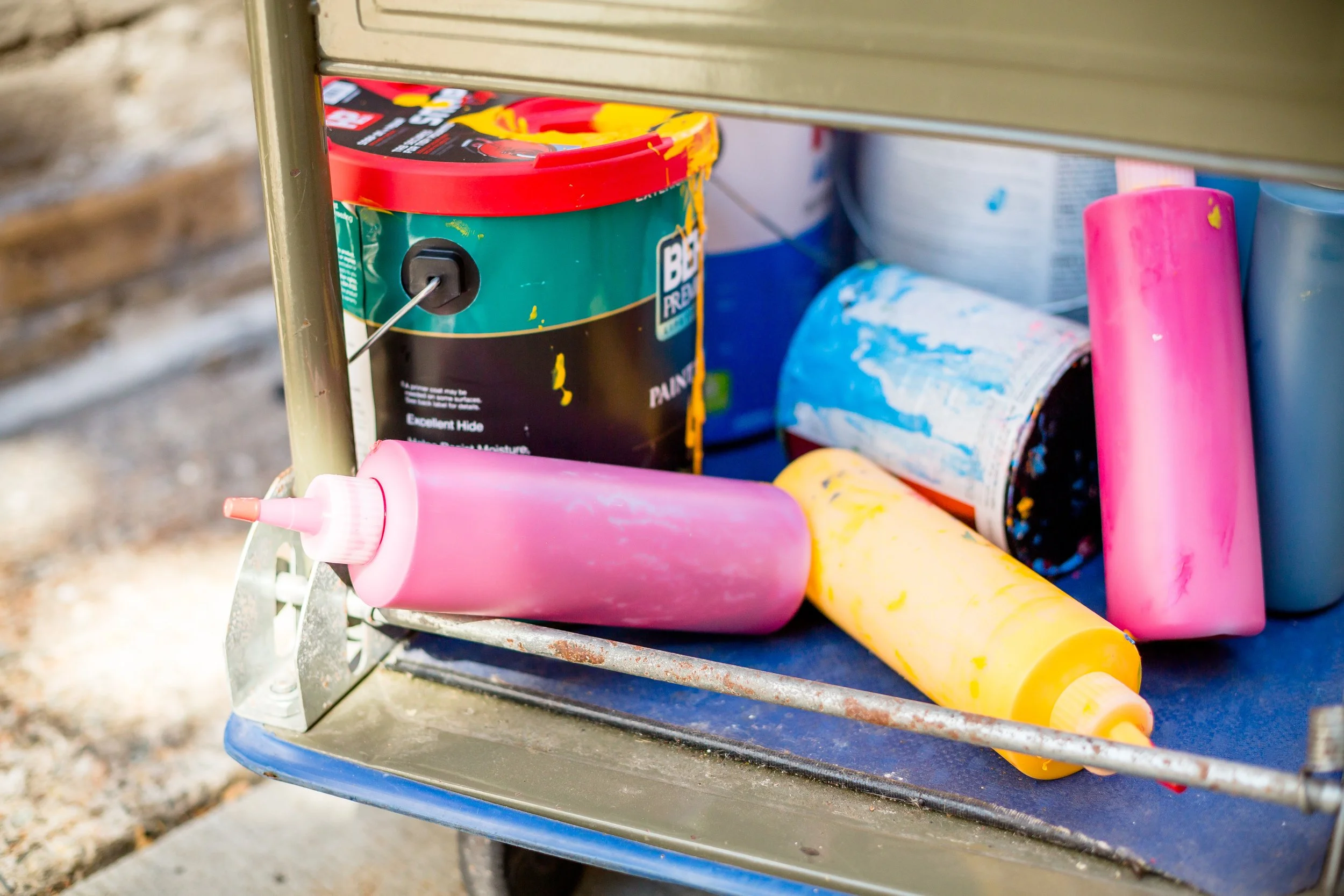
The volunteers proved something I already believed but got to see again: people want to be part of something meaningful. They don't need to be convinced. They just need permission and invitation.
Flexibility Is Essential
The wall texture, the weather, the design pivots—none of it went exactly as planned. But planning isn't about predicting the future. It's about having vision clear enough that you can adapt and still stay true to the process.
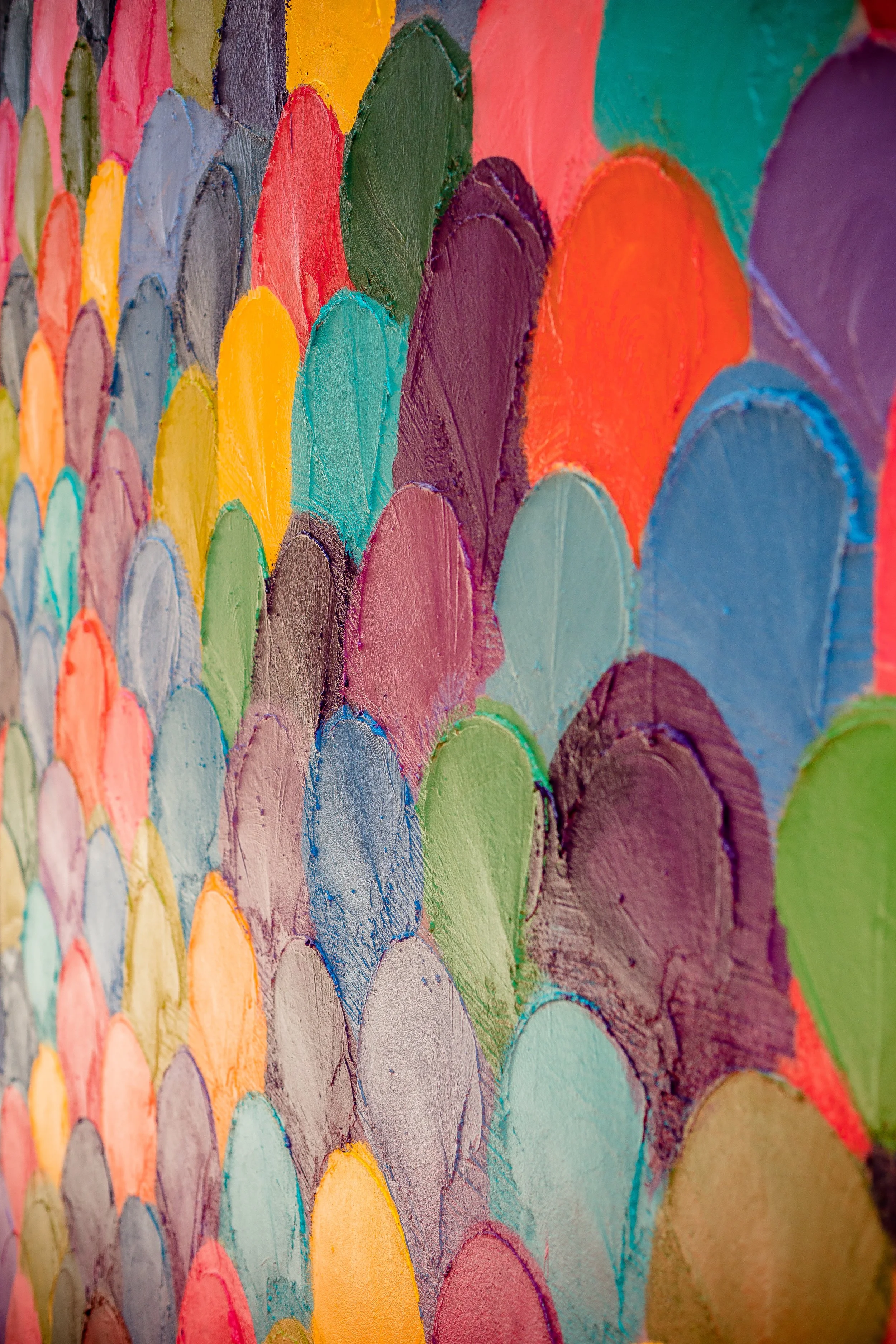
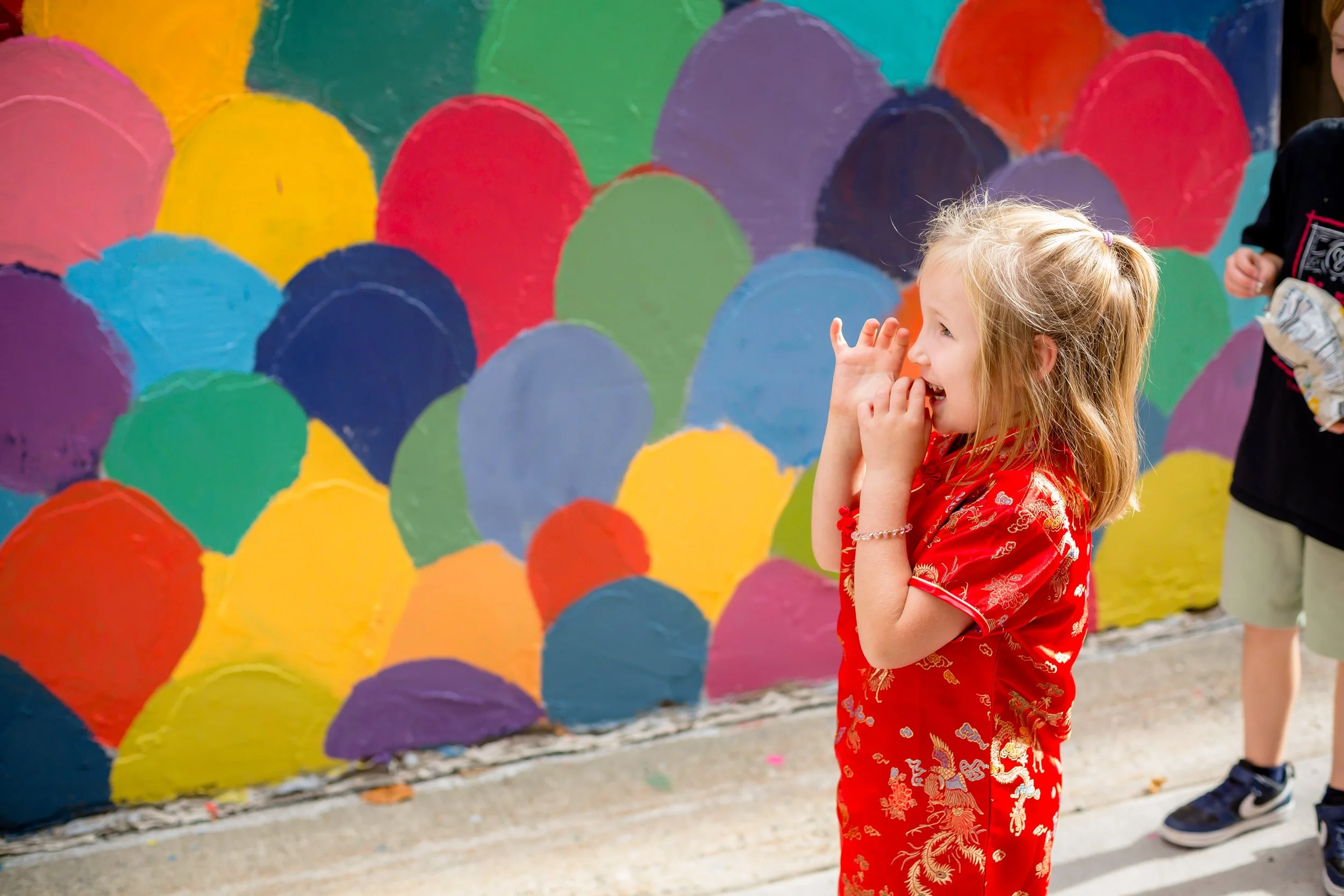
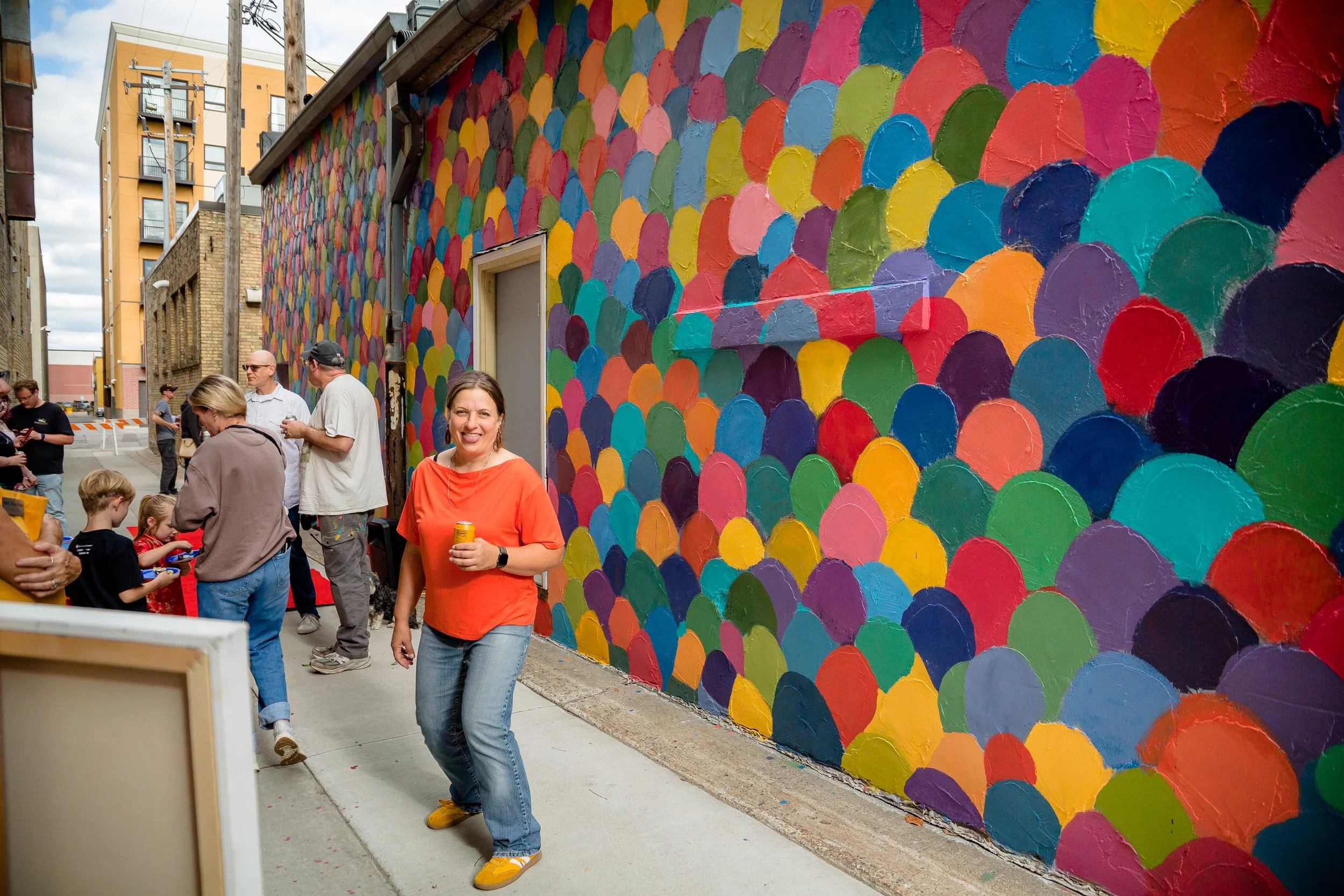
Close up of the mural
Art Belongs in Alleys
Not just in galleries. Not just in institutions. In alleys. In neighborhoods. Where people actually live and walk and gather. That's where art matters most.
WHAT'S NEXT
Since the unveiling, people have reached out wanting to do similar murals in their alleys, by their workplaces, in their neighborhoods.
That's the real win.
Prism Path wasn't just about one wall. It was about showing that downtown St. Cloud values creativity. That our neighborhoods matter. That public space can be beautiful and accessible and community-driven.
The next mural is already in conversation.
And this time, we'll know to ask the right questions from the start.
THANK YOU
To Jon at Books Revisited for his honesty and partnership. To the 25+ community members who participated in design sessions. To the 7 volunteers who showed up without being asked. To Chloe, Breanna, and Else for their artistry and flexibility. To Tyler Bevier for coordination and vision. To the community members who walk by every day and tell me it brightens their world.
This mural exists because of you.
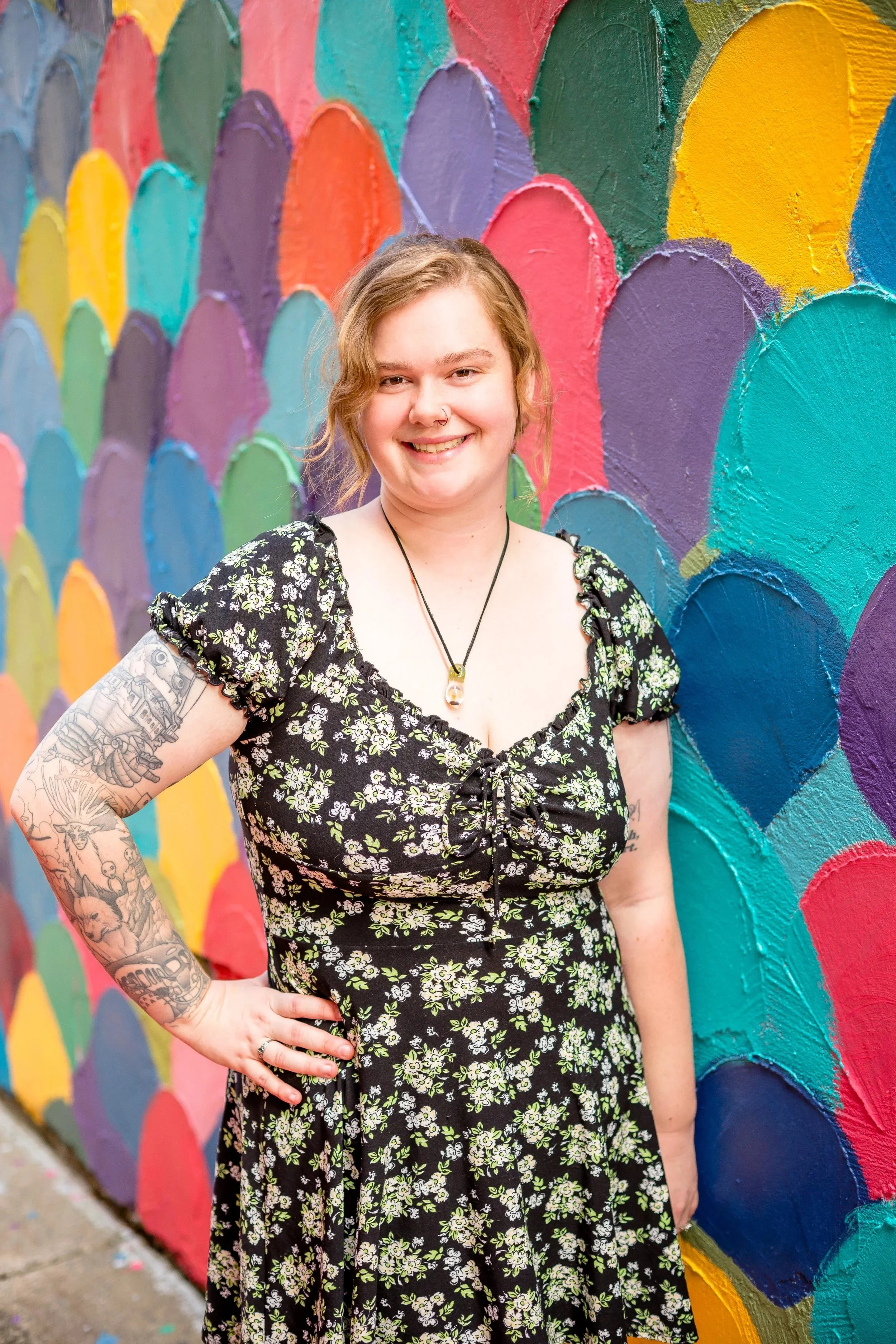
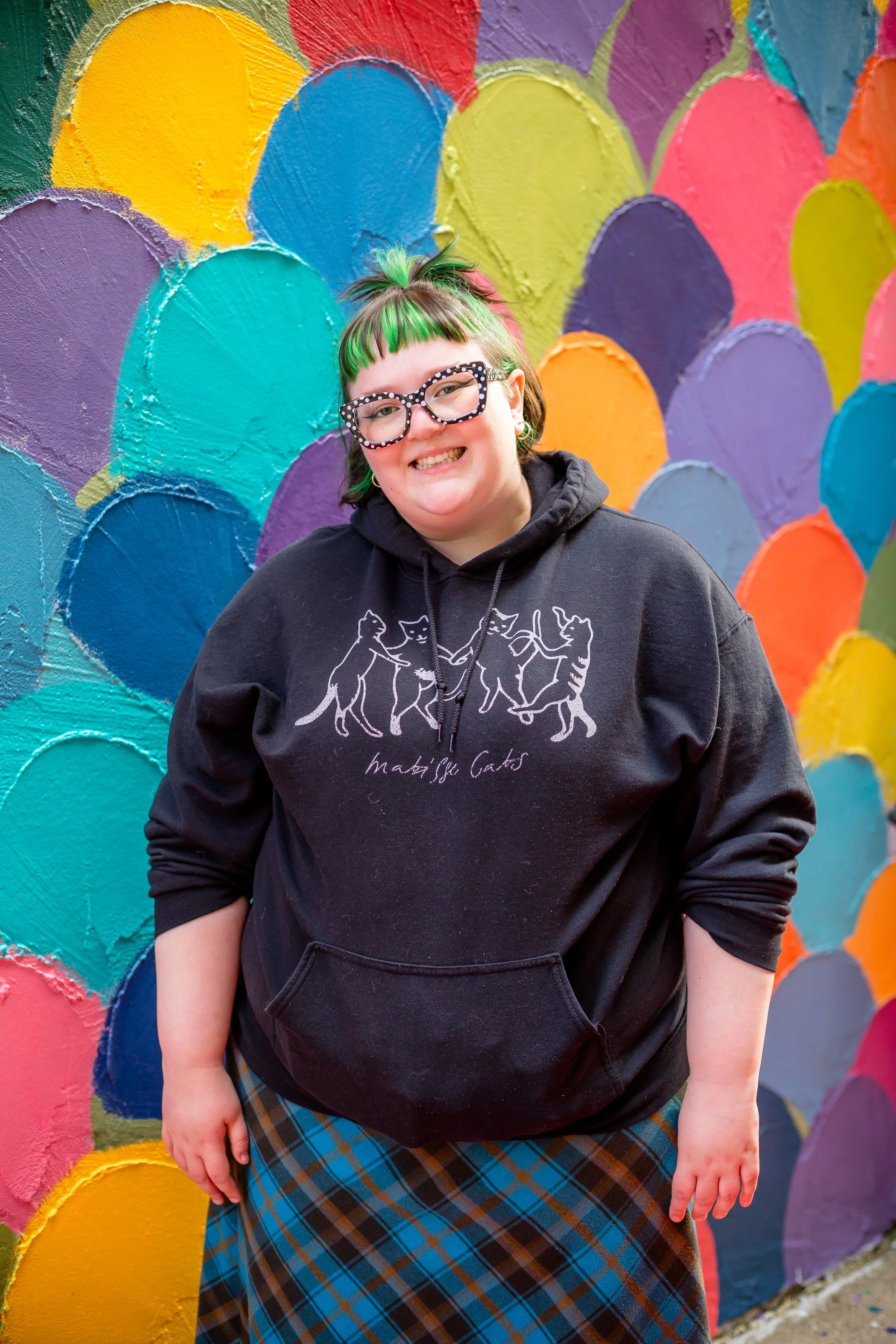
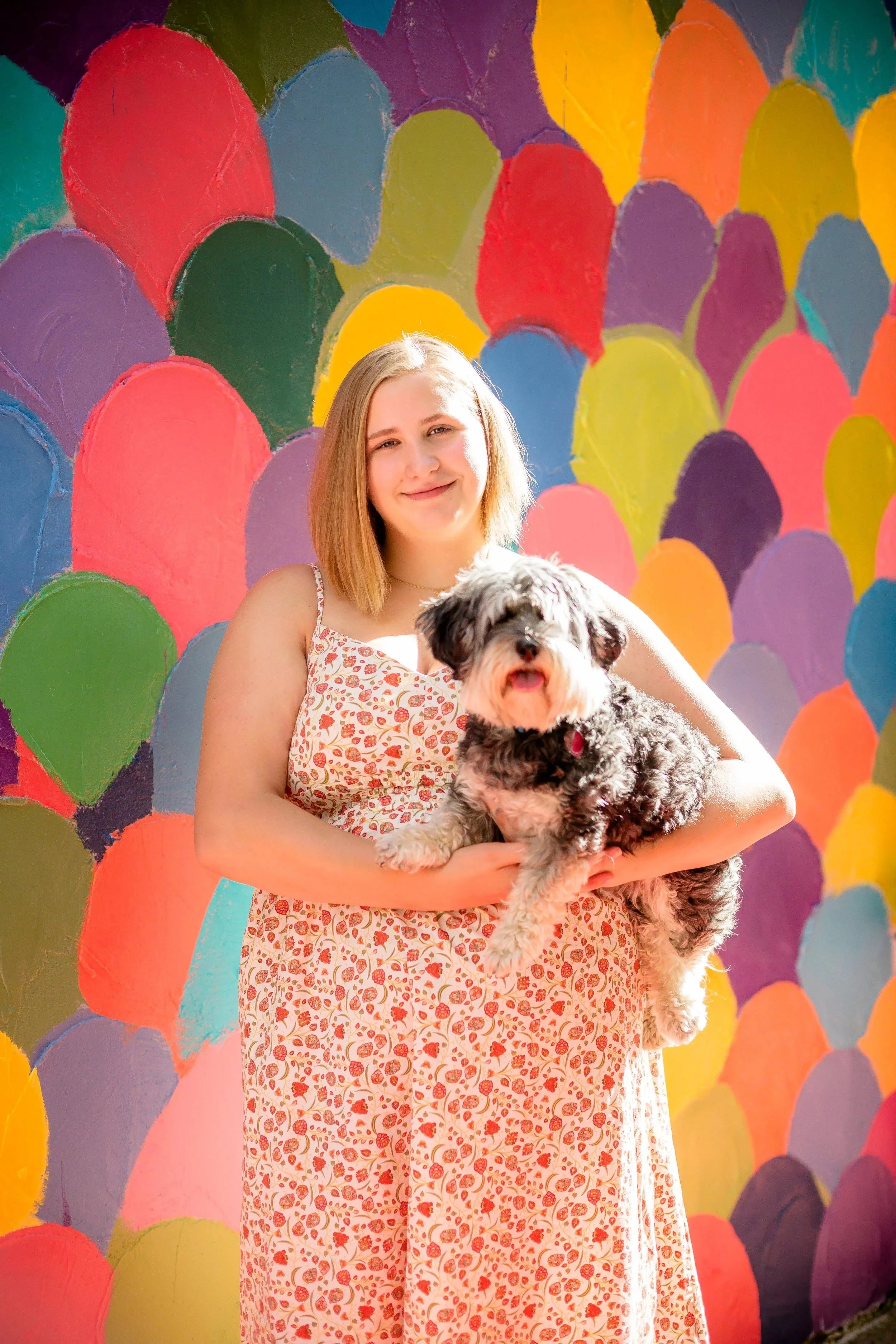
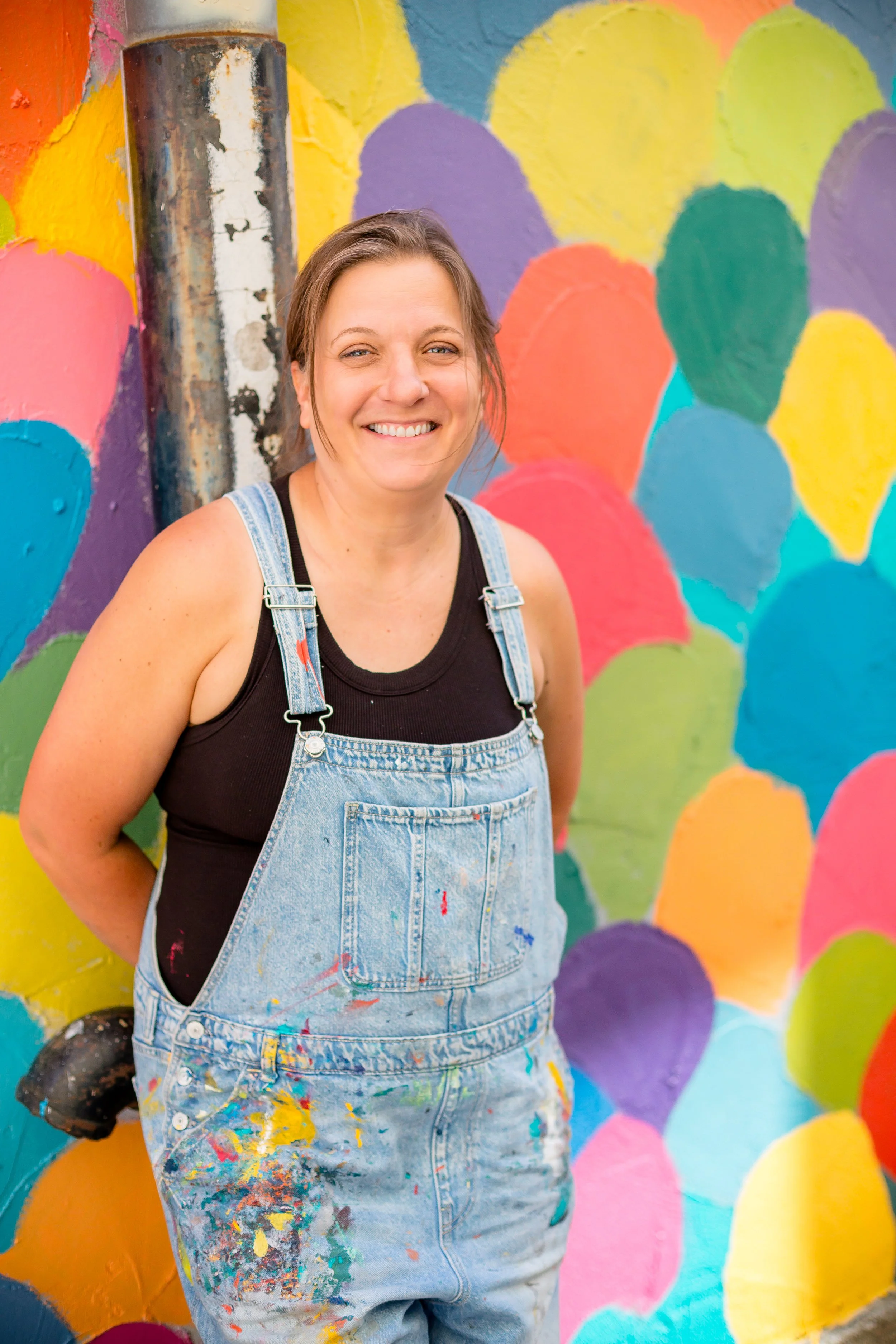
Heidi Jeub, Artist Lead
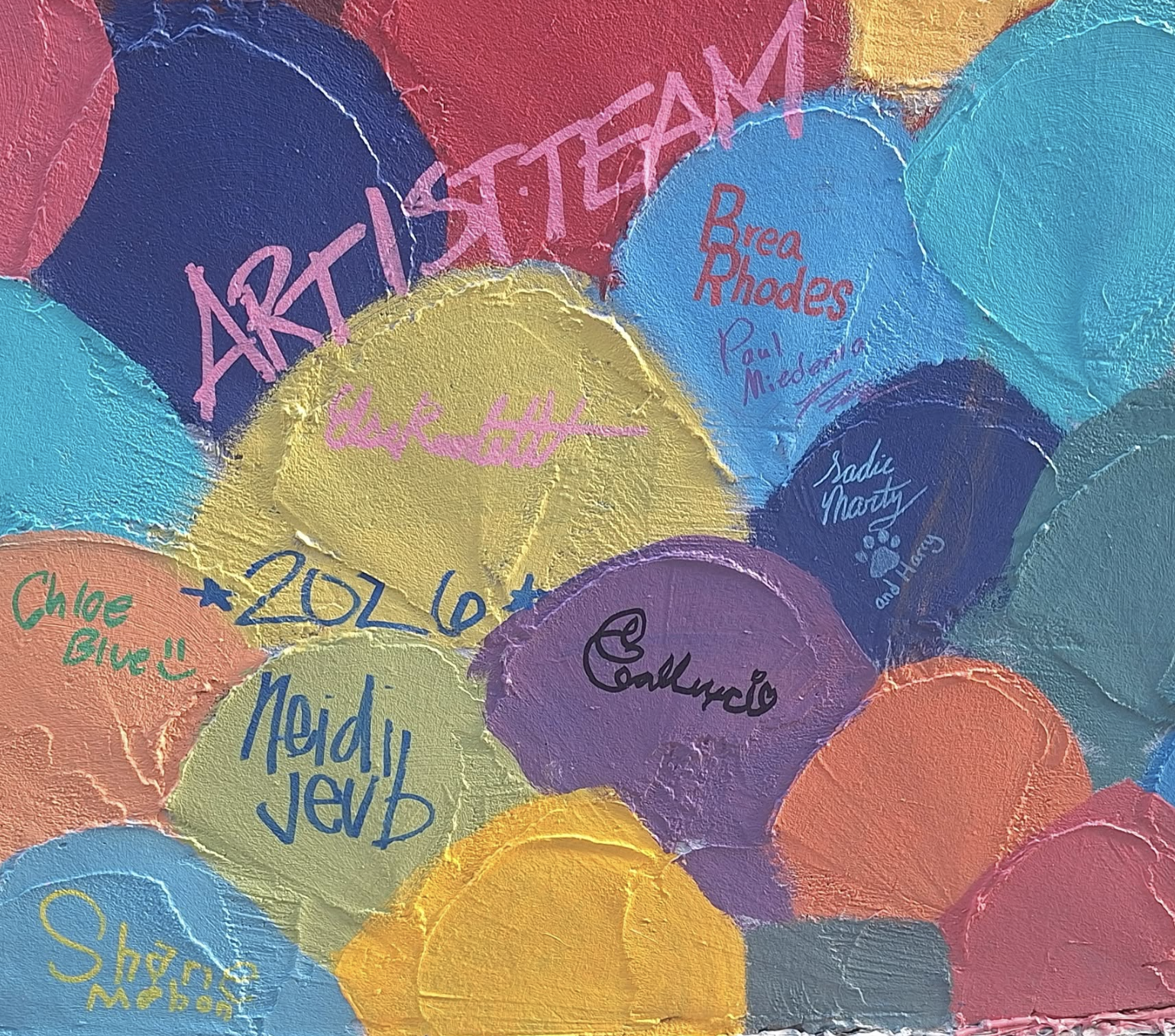
And Special Thanks to our volunteers — Galluxci Wenzel, Shane Mahon, Sadie Marty (& Harry), Paul Miedema, Betz Steichen, Leon and Sheila Wolf, and David Bushman. Photos by Niky Studenski